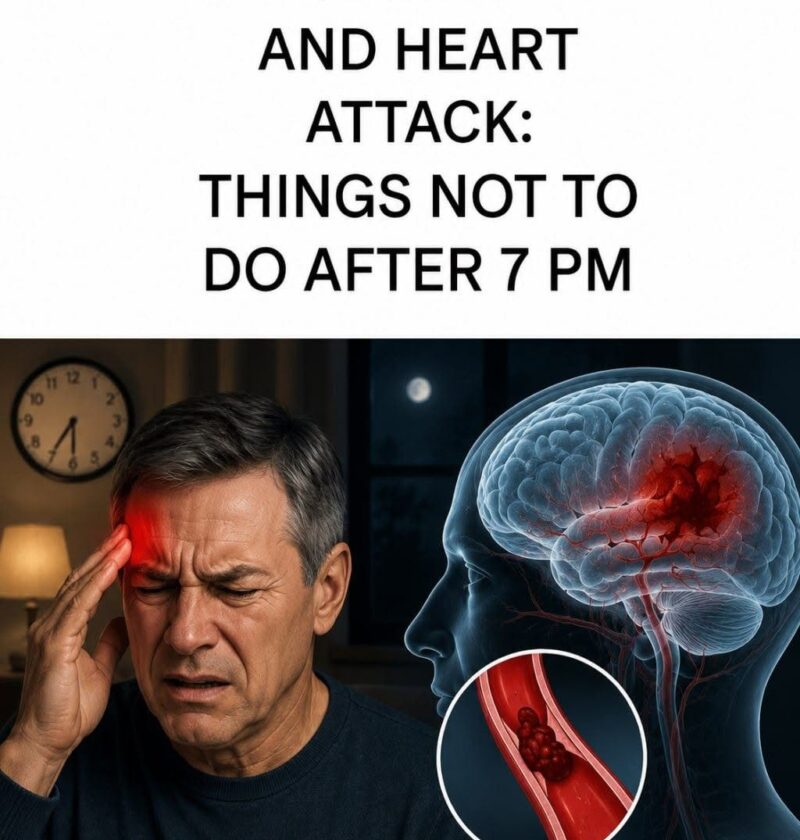
If you’re referring to the claim “Heart at Risk After 7 p.m.: Evening Habits That May Increase the Risk of Stroke and Heart Attack,” the idea is not that a specific clock time (7 p.m.) suddenly makes the heart vulnerable. Rather, certain evening habits can influence blood pressure, blood sugar, sleep quality, and long-term cardiovascular risk.
Evening habits that may affect heart health
1. Eating very large or heavy meals late at night
- Late, high-calorie meals may contribute to weight gain, poorer blood sugar control, and disrupted sleep.
- People with reflux or metabolic issues may be especially affected.
2. Excess salt at dinner
- Salty evening meals can raise fluid retention and may increase blood pressure in some people.
3. Alcohol close to bedtime
- Alcohol can disturb sleep, affect heart rhythm in some people, and contribute to higher blood pressure when consumed regularly.
4. Smoking or nicotine use in the evening
- Nicotine increases heart rate and blood pressure and damages blood vessels over time.
5. Long periods of sitting after dinner
- Remaining inactive for hours after eating may worsen blood sugar control. A gentle walk after meals can help many people.
6. Poor sleep habits
- Short sleep, irregular sleep schedules, and sleep disorders such as sleep apnea are linked with increased cardiovascular risk.
7. Stress and emotional strain at night
- Chronic stress can affect hormones, blood pressure, and sleep quality.
Heart-friendly evening habits
- Finish larger meals a few hours before bedtime when possible.
- Choose vegetables, lean proteins, whole grains, and moderate portions.
- Limit excess salt and alcohol.
- Take a short walk after dinner if appropriate.
- Keep a consistent sleep schedule.
- Manage stress with relaxing routines such as reading, breathing exercises, or gentle stretching.
Seek urgent medical help for warning signs
Call emergency services if you experience:
- Chest pressure, squeezing, or pain
- Pain spreading to the arm, jaw, back, or shoulder
- Sudden weakness or numbness on one side of the body
- Trouble speaking or understanding speech
- Sudden severe headache
- Sudden vision problems