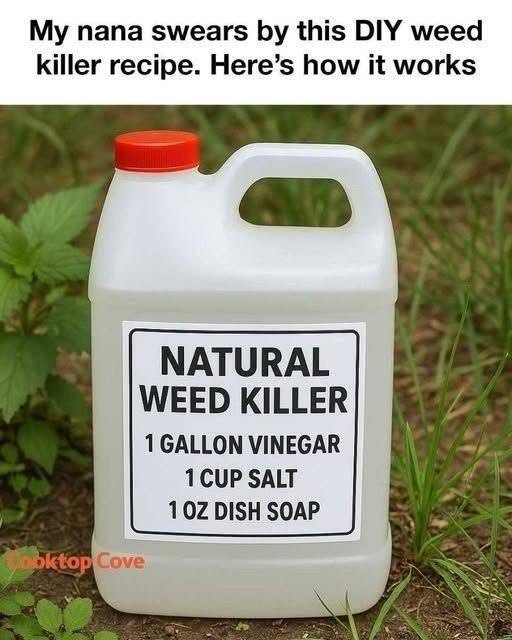
DIY “weed killer recipes” are very popular online, but most are overstated in effectiveness and safety. They can kill small, young weeds in some cases—but they are not selective and not always long-lasting.
Here’s what these recipes usually involve and how they actually work:
🌿 Common DIY weed killer ingredients
Most home versions use:
- White vinegar
- Salt
- Dish soap
⚗️ How it actually works
1. Vinegar (acid burns plant tissue)
- Acetic acid dries out leaves on contact
- Works best on young, small weeds
- Usually only kills the top growth, not deep roots
2. Salt (dehydrates plants)
- Draws moisture out of plant cells
- Can kill weeds, but:
- Stays in soil for a long time
- Can prevent future plant growth in that area
3. Dish soap (helps sticking)
- Breaks surface tension so mixture sticks to leaves
- Does not kill weeds by itself
⚠️ Important downsides
- ❌ Not selective (can kill grass and garden plants too)
- ❌ Can damage soil health (especially salt)
- ❌ Often only temporary—roots may regrow weeds
- ❌ Repeated use can make soil unusable for planting
🌱 What works better (more reliable options)
- Manual removal (best for deep-rooted weeds)
- Mulching to block sunlight
- Boiling water for weeds in cracks
- Targeted commercial herbicides (if needed)
🧠 Bottom line
DIY weed killer recipes can burn weeds on contact, but they are not a perfect or long-term solution—and salt-based versions can damage soil for future gardening.
If you want, I can give you a safe, garden-friendly weed control plan that actually prevents regrowth without damaging soil.