What Happens to the Body After Gallbladder Removal? Are There “3 Diseases” That Follow?
Headlines claiming that gallbladder removal causes several diseases and that surgery should be avoided are often misleading. Gallbladder removal (cholecystectomy) is one of the most common surgeries and is generally considered safe when it is medically necessary.
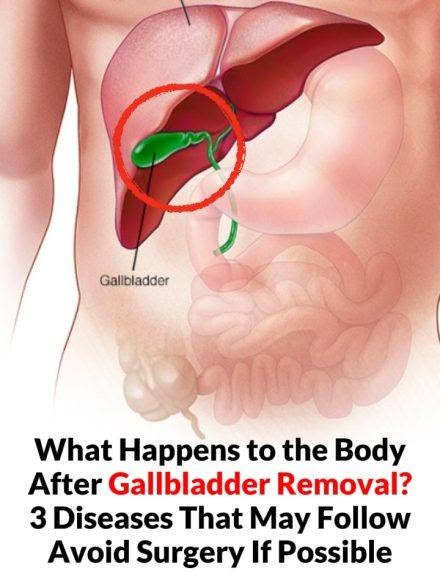
The gallbladder is a small organ that stores and concentrates bile, a digestive fluid made by the liver. After removal, the liver still produces bile, but it flows directly into the small intestine instead of being stored.
Possible changes after gallbladder removal
1. Changes in digestion
Some people experience:
- Loose stools or diarrhea
- Gas or bloating
- Discomfort after eating fatty foods
These symptoms are often temporary and improve as the body adapts.
2. Bile-related diarrhea
Because bile enters the intestine more continuously without a gallbladder, some people develop bile acid diarrhea. This can often be treated with diet changes or medications prescribed by a doctor.
3. Difficulty with very fatty meals
The body can still digest fat, but some people feel better when they:
- Eat smaller meals
- Reduce fried or very fatty foods
- Increase fiber gradually
Does gallbladder removal cause serious diseases?
There is no evidence that gallbladder removal automatically causes major diseases. Some studies have explored possible links between gallbladder removal and certain long-term health changes, but this does not mean the surgery itself causes illness.
The risks of untreated gallbladder disease can be serious, including:
- Gallbladder infection
- Blocked bile ducts
- Pancreatitis (inflammation of the pancreas)
When surgery is usually recommended
Doctors may recommend removal for:
- Repeated painful gallstone attacks
- Gallbladder inflammation
- Complications from gallstones
- Certain gallbladder conditions that increase risk