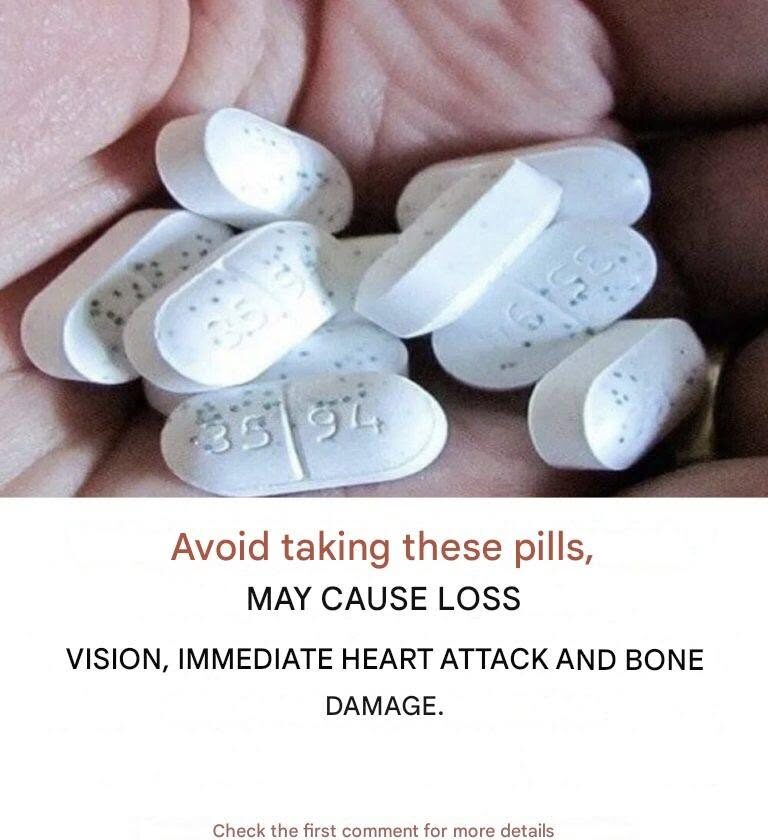
That statement is alarmist and scientifically incomplete. No one can evaluate “these tablets” without knowing the exact medication.
Blood clots (thrombosis) and heart attacks (Myocardial infarction) are serious conditions, but they are not caused by all tablets in general—only specific medicines under certain conditions may slightly increase risk.
⚠️ Why this claim is misleading
- “These tablets” is not specific
- Many medications actually prevent blood clots, not cause them
- Risk depends on dose, duration, and patient health
💊 Medicines that may increase clot risk (in some cases)
Only certain categories have a known association in specific people:
- Estrogen-based contraceptives
- Hormone replacement therapy
- Some cancer treatments
- Certain anti-inflammatory painkillers (long-term/high-dose use)
Even here:
- The risk is usually small
- Doctors prescribe them only when benefits outweigh risks
💊 Medicines that reduce clot risk
Some drugs are specifically designed to PREVENT clots:
- Anticoagulants (blood thinners)
- Antiplatelet medicines
These are commonly used after:
- Stroke
- Heart attack
- Surgery
🚨 Real major causes of blood clots
Much more important than vague “tablets”:
- Smoking
- Obesity
- Long periods of immobility
- Surgery or injury
- Genetic clotting disorders
- Certain chronic diseases