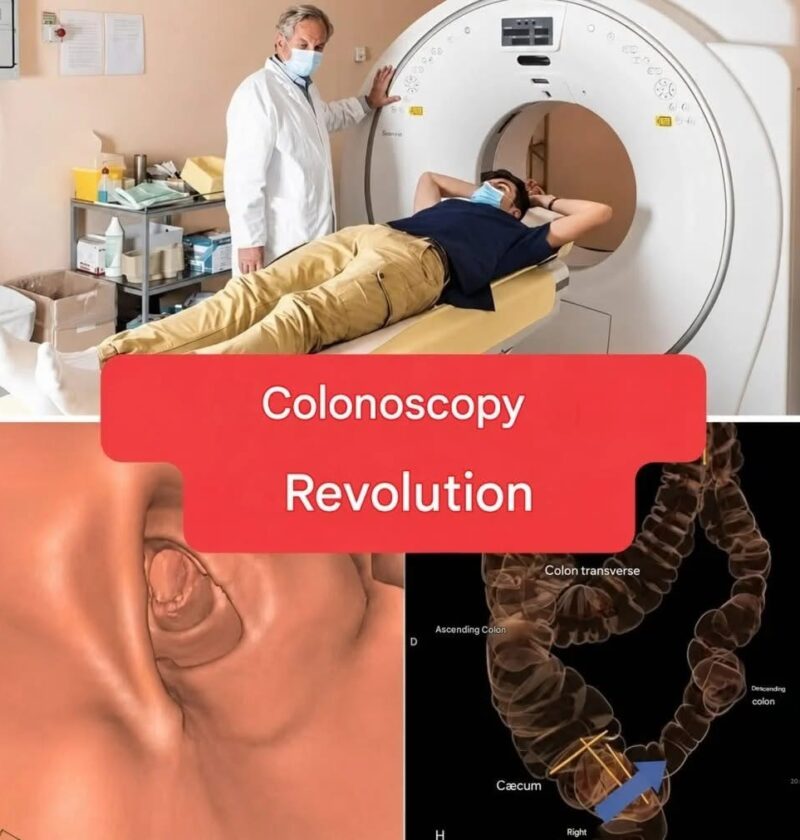
The claim “New method: colonoscopy will no longer be an invasive examination” is only partly accurate.
Researchers have developed and continue to improve less invasive alternatives to traditional colonoscopy, but none has completely replaced it as the standard test for diagnosing and removing precancerous polyps.
Some alternatives include:
- Stool-based tests: These look for hidden blood or abnormal DNA in the stool. They are noninvasive and can be done at home, but if the result is positive, a traditional colonoscopy is usually needed.
- CT colonography (“virtual colonoscopy”): This uses a CT scan to create images of the colon. It is less invasive than a conventional colonoscopy but still requires bowel preparation, and if abnormalities are found, a standard colonoscopy is needed to remove or biopsy them.
- Capsule endoscopy: In some situations, a person swallows a small camera inside a capsule. While useful for certain parts of the digestive tract, it is not a routine replacement for colonoscopy in colorectal cancer screening because it cannot remove polyps or take tissue samples.
Traditional colonoscopy remains the most comprehensive test because it allows the doctor to:
- Examine the entire colon.
- Remove polyps during the same procedure.
- Take biopsies if needed.
If you saw this as a headline or social media post, it’s likely referring to one of these newer technologies or an experimental technique. These advances are promising, but they have not made conventional colonoscopy obsolete. Any new screening method must be shown to be accurate, safe, and practical before it can replace the current standard of care.