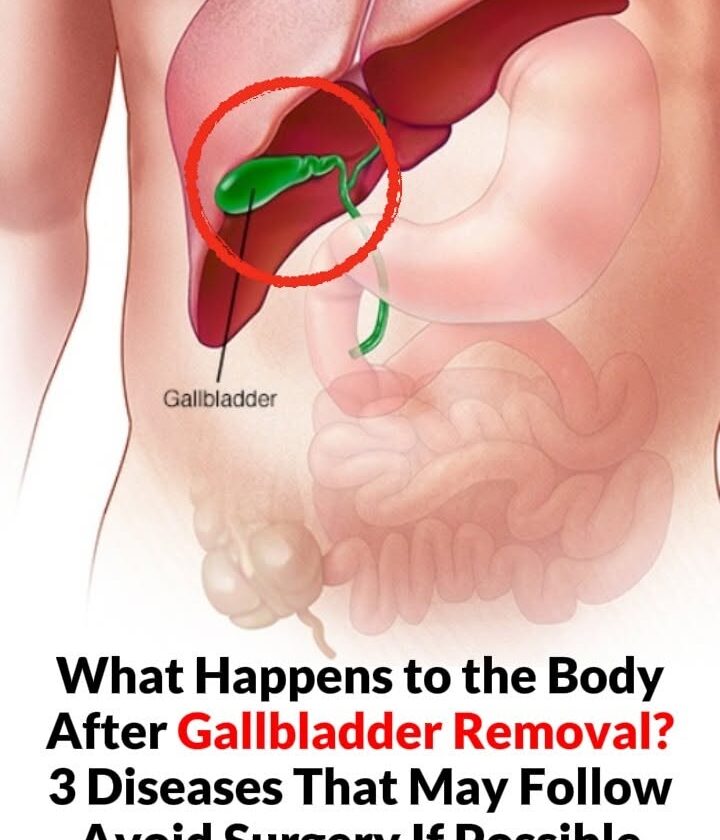
The headline “What Happens to the Body After Gallbladder Removal? 3 Diseases That May Follow – Avoid Surgery If Possible” is written in a fear-based way. The reality is more balanced: gallbladder removal (cholecystectomy) is a common and generally safe surgery, and for many people it is the best treatment for problems like painful gallstones or repeated gallbladder inflammation.
After gallbladder removal:
- Bile still helps digest food. The liver continues making bile; it simply flows directly into the small intestine instead of being stored in the gallbladder.
- Most people return to a normal diet and lifestyle.
- Some people may temporarily experience:
- Loose stools or diarrhea
- Bloating or gas
- Difficulty tolerating very fatty meals
Possible longer-term issues in some people can include:
- Bile acid diarrhea
Extra bile reaching the colon can irritate it and cause frequent loose stools. This can often be treated. - Digestive changes after high-fat meals
Some people notice discomfort after very rich foods and may need dietary adjustments. - Rare complications or unrelated health conditions
As with any surgery, there are risks, but claims that gallbladder removal routinely causes serious “new diseases” are not supported.
Avoiding surgery is not always safer. If a gallbladder is causing repeated attacks, infection (cholecystitis), blockage, or certain complications, delaying treatment can carry risks.
If you have gallstones or are considering surgery, the decision depends on factors such as:
- whether you have symptoms,
- the number and size of stones,
- inflammation or infection,
- your overall health.
If you share what prompted the question (gallstones, pain attacks, a doctor’s recommendation, or a planned surgery), I can explain what usually applies.