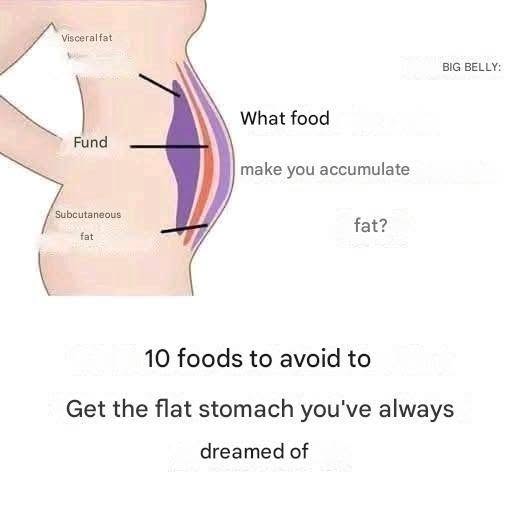
The idea that avoiding certain foods will “give you a flat stomach” is a bit misleading. No single food causes belly fat, and you cannot target fat loss from only one area of the body. A flatter-looking stomach usually comes from a combination of overall fat loss (if needed), reduced bloating, good digestion, strength training, and healthy habits.
That said, some foods are more likely to contribute to bloating, water retention, or excess calorie intake for many people:
10 foods to limit if you want a less bloated, healthier midsection
- Sugary drinks
- Sodas, sweet teas, and many energy drinks add calories without making you feel full.
- Highly processed snacks
- Chips, cookies, and packaged snacks often contain refined carbohydrates, added sugars, and excess salt.
- Refined breads and pastries
- White bread, cakes, and many baked goods can be easy to overeat and may contribute to blood sugar swings.
- Processed meats
- Foods like sausages, bacon, and deli meats are often high in sodium and may increase water retention.
- Alcohol (especially excess intake)
- Alcohol can add extra calories and may affect appetite and fat storage patterns.
- Large portions of fried foods
- Fried foods are calorie-dense and may cause digestive discomfort in some people.
- Foods high in added sugar
- Candy, desserts, and sweetened cereals can make it harder to maintain a calorie balance.
- Some gas-producing foods (for sensitive people)
- Beans, onions, certain vegetables, and artificial sweeteners can cause bloating in some individuals.
- High-sodium foods
- Instant noodles, fast food, and salty snacks can cause temporary water retention.
- Large amounts of ultra-processed “diet” foods
- Some low-calorie products contain sweeteners or additives that may bother certain digestive systems.
Foods that often support a healthier waistline
- Vegetables and fruits
- Protein sources (fish, eggs, beans, poultry, tofu)
- Whole grains
- Nuts and seeds in reasonable portions
- Plenty of water
Bottom line: A “flat stomach” is influenced by genetics, body composition, digestion, and lifestyle. Reducing highly processed foods and focusing on balanced meals is more effective than avoiding one specific food group.