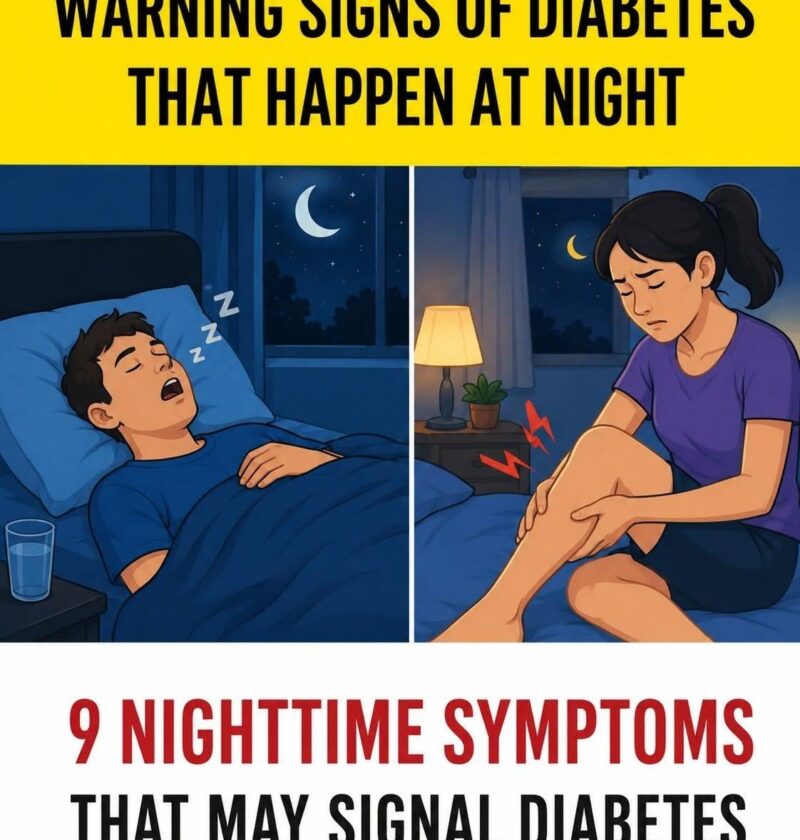
If you mean signs of diabetes that may become noticeable at night, these are some common ones. They can also be caused by other conditions, so having one symptom does not confirm diabetes.
9 possible nighttime signs of diabetes
- Frequent urination at night (nocturia)
- High blood sugar can make the kidneys remove extra glucose through urine, increasing the need to wake up and urinate.
- Excessive thirst at night
- Fluid loss from frequent urination can cause strong thirst, including waking up needing water.
- Night sweats
- Low blood sugar episodes (especially in people taking insulin or certain diabetes medicines) may cause sweating, shakiness, or a racing heartbeat during sleep.
- Trouble sleeping
- Blood sugar fluctuations, thirst, frequent bathroom trips, or discomfort from nerve symptoms can disturb sleep.
- Tingling, burning, or numbness in the feet
- Diabetes-related nerve damage (diabetic neuropathy) may feel worse at night when you are resting.
- Increased hunger after waking or during the night
- Poor glucose regulation can leave the body unable to use sugar properly, sometimes causing unusual hunger.
- Dry mouth
- Dehydration from high blood sugar can lead to a dry mouth, especially overnight.
- Blurred vision that comes and goes
- Changes in blood sugar levels can affect the lens of the eye and cause temporary vision changes.
- Slow-healing wounds or nighttime leg discomfort
- Diabetes can affect circulation and nerves, contributing to foot pain, cramps, or delayed healing.
When to consider getting checked
If you have several of these symptoms—especially frequent urination, increased thirst, unexplained weight loss, fatigue, or recurrent infections—it may be worth getting a blood glucose test such as a fasting blood sugar test or HbA1c test.
Seek urgent medical care if you have symptoms like very high thirst with vomiting, severe weakness, confusion, difficulty breathing, or fruity-smelling breath, as these can be signs of a dangerous blood sugar problem.