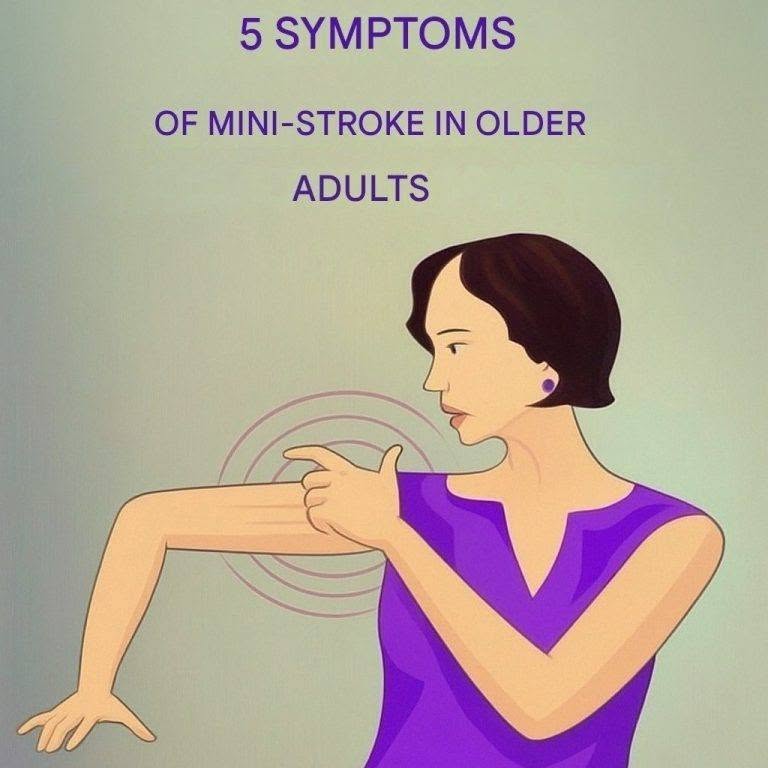
If you mean a “mini-stroke” (TIA, or transient ischemic attack), it is a temporary blockage of blood flow to the brain. Symptoms may disappear within minutes or hours, but a TIA can be a warning sign of a possible major stroke and needs urgent medical attention.
5 Symptoms of a Mini Stroke in Seniors That Shouldn’t Be Ignored
- Sudden weakness or numbness on one side of the body
- Weakness, tingling, or loss of feeling in the face, arm, or leg—especially on one side—can be a warning sign.
- Sudden trouble speaking or understanding speech
- Slurred speech, difficulty finding words, confusion, or trouble understanding others may indicate a problem with brain blood flow.
- Sudden vision changes
- Blurred vision, double vision, or temporary loss of vision in one or both eyes should be taken seriously.
- Sudden dizziness, loss of balance, or difficulty walking
- Unexplained dizziness, poor coordination, stumbling, or trouble with movement can occur during a TIA.
- Sudden severe headache or unusual neurological changes
- A sudden, intense headache—especially if it is different from usual—or sudden confusion, memory problems, or changes in alertness can be concerning.
What to do if these symptoms occur
Even if symptoms go away, seek emergency medical care immediately. Doctors need to determine whether it was a TIA and identify ways to reduce the risk of a full stroke.
A quick way to remember stroke warning signs is FAST:
- F — Face: Does one side of the face droop?
- A — Arms: Is one arm weak or numb?
- S — Speech: Is speech strange or difficult?
- T — Time: Call emergency services right away.
If you’re asking because an older adult is having symptoms right now, treat it as an emergency rather than waiting to see if it improves.