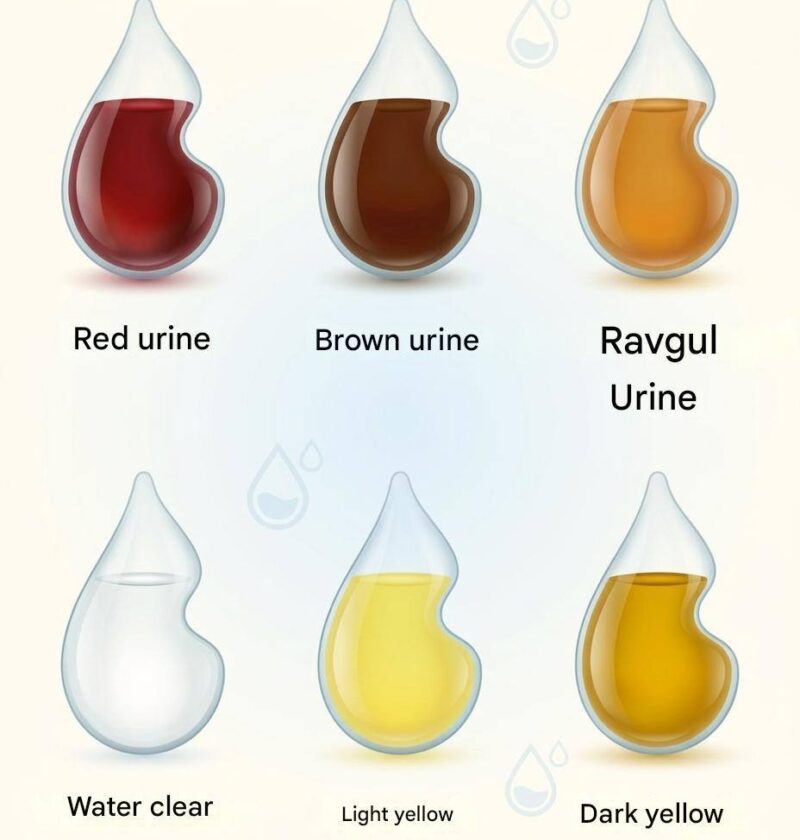
Urine color can give useful clues about hydration and sometimes overall health—but it’s not a diagnosis on its own. Here’s a practical guide:
🟡 Light yellow (straw/amber)
This is ideal. It usually means you’re well hydrated and your kidneys are doing their job normally.
💧 Clear urine
Often means you’re drinking a lot of water. That’s usually fine, but if it’s constantly clear, you may be overhydrating, which can dilute important electrolytes.
🌑 Dark yellow or honey-colored
Most commonly a sign of dehydration. Your body is conserving water, so urine becomes more concentrated.
🟠 Orange
Can be dehydration, but also sometimes:
- Certain medications (like some antibiotics or laxatives)
- Liver or bile duct issues (especially if paired with pale stools or yellowing eyes/skin)
🩷 Pink or red
Can look alarming. Possible causes include:
- Blood in urine (hematuria)
- Beets, berries, or food dyes
- Urinary tract infections (Urinary Tract Infection)
- Kidney stones
If it happens without an obvious food cause, it should be checked.
🟤 Brown or cola-colored
May suggest:
- Severe dehydration
- Liver problems
- Muscle breakdown (rare but serious)
- Certain medications
🟢 Blue or green (rare)
Usually due to:
- Food dyes
- Some medications
- Rare bacterial infections
⚠️ When to worry
You should get medical advice if urine color changes:
- Lasts more than 1–2 days without a clear reason
- Comes with pain, fever, or burning
- Includes visible blood
- Is dark brown or red repeatedly
🧠 Important takeaway
Urine color mainly reflects:
- Hydration status
- Diet/medications
- Sometimes underlying conditions like Kidney disease or infections
If you want, I can also give you a simple “hydration chart” or explain what urine smell and frequency can indicate too.