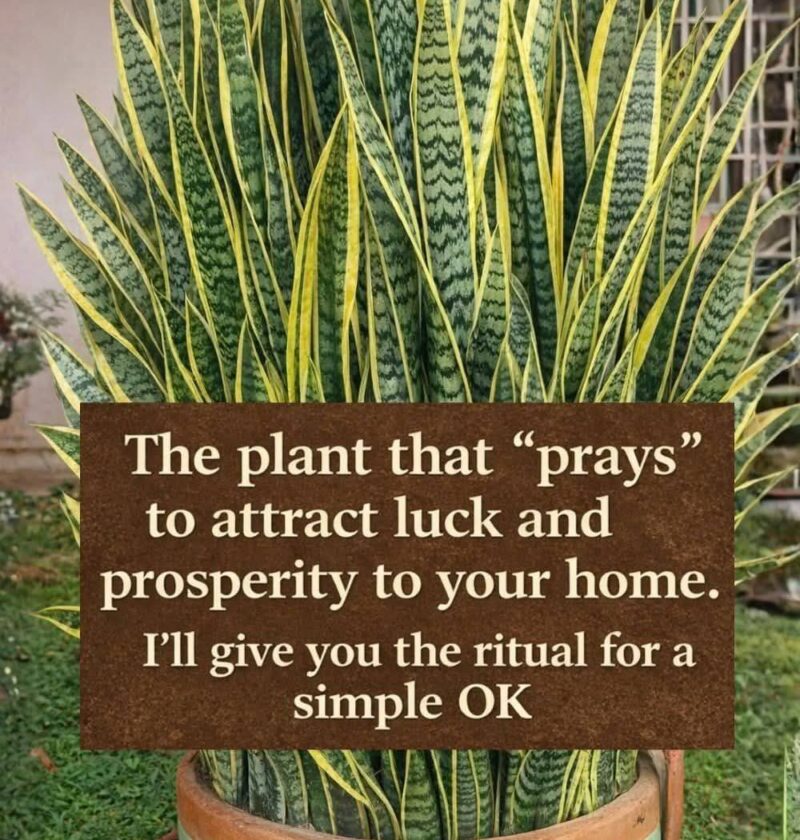
That’s referring to the “prayer plant,” usually the Maranta leuconeura (and sometimes similar plants like Calathea).
Why it’s called “the plant that prays”
It’s not spiritual or magical. It’s a natural movement called nyctinasty:
- During the evening, its leaves fold upward
- In the morning, they open again
- It looks like hands in prayer, which is where the name comes from
About “luck and prosperity”
The idea that it brings luck or wealth is a cultural belief / home-decor myth, not a scientific fact. There’s no evidence that it affects finances, energy, or fortune.
What it actually does
These plants are valued because:
- They look decorative and patterned
- They improve indoor aesthetics
- They thrive in indirect light and humid environments
- They can slightly improve indoor air quality (like most houseplants, modestly)
Bottom line
It’s a beautiful plant with a natural day-night rhythm—not a luck charm. The “prosperity” claim is marketing and folklore, not biology.
If you want, I can tell you which houseplants are actually easiest to keep alive in homes like yours (low light, hot climate, etc.).