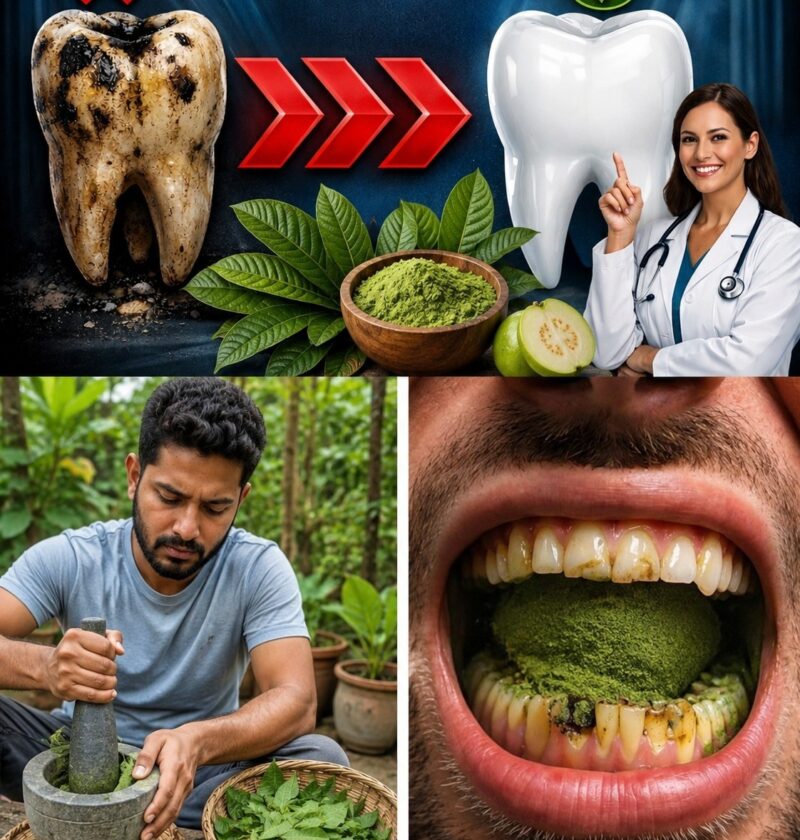
First: cavities cannot be “treated” with guava leaves
A cavity (dental caries) is a physical hole in the tooth caused by bacteria producing acid that destroys enamel. Once a cavity forms, it:
- does not heal on its own
- does not get reversed by herbs, rinses, or home remedies
Only a dentist can properly treat it with:
- filling
- root canal (if deep)
- extraction (in severe cases)
- fluoride treatments for very early decay
Where guava leaves come in (what’s actually true)
Guava leaves do have some antibacterial and anti-inflammatory properties in lab studies. Because of this, people use them for:
- reducing bad breath
- mild gum inflammation (gingivitis support)
- temporary antibacterial mouth rinses
But important point:
👉 they may help gum health, not repair tooth decay.
Why “guava leaf cures cavities” is misleading
Even if guava leaves reduce bacteria slightly:
- they cannot rebuild lost enamel
- they cannot close a cavity hole
- they cannot remove decay inside the tooth
At best, they might slow irritation in the gums around a decayed tooth—but the cavity itself continues progressing underneath.
Safer, economical alternatives that actually help
If someone is trying to avoid costly dental problems:
- Brush twice daily with fluoride toothpaste
- Limit sugary snacks and drinks
- Rinse after meals with clean water
- Use dental floss (very important for cavity prevention)
- See a dentist early for small fillings (cheaper than root canals)
When to be careful
If there is:
- tooth pain
- sensitivity to cold/hot
- visible hole or dark spot
Home remedies are not enough—delaying treatment usually makes it more expensive later.
If you want, I can tell you which home remedies are actually useful for pain relief vs. completely useless so you can quickly filter these viral posts.