Which sleeping position is best?
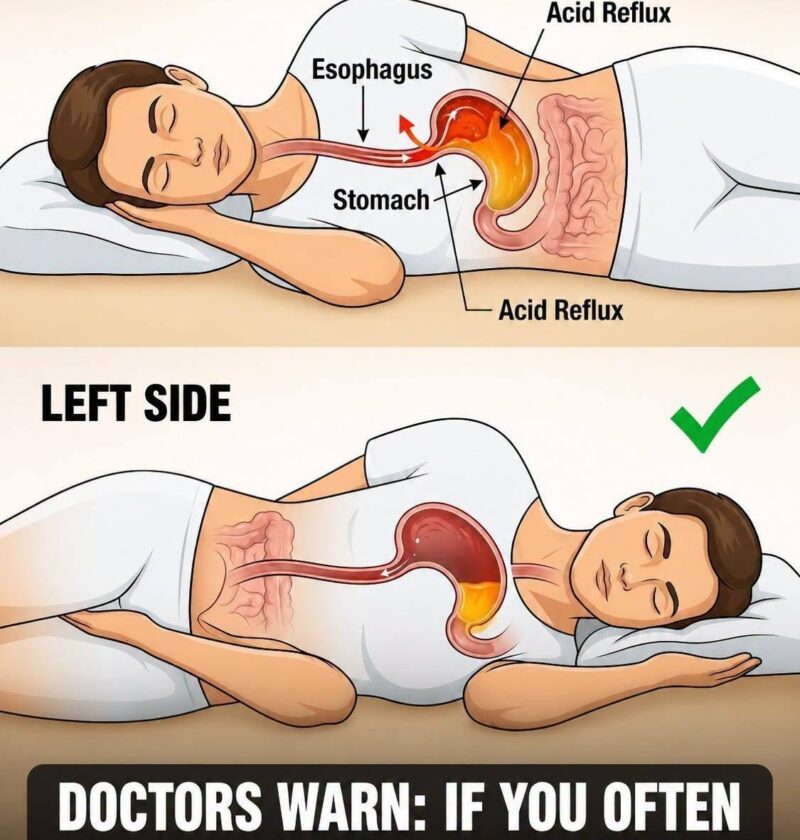
Sleeping on your left side
Research suggests that sleeping on the left side may help reduce nighttime acid reflux for some people. This position may help keep stomach contents lower, making reflux less likely.
Sleeping on your right side
Some studies suggest that sleeping on the right side may worsen reflux symptoms in some people, although this does not happen to everyone.
Sleeping on your back
Sleeping on your back can allow acid to reflux more easily in some people. Raising the head of the bed by about 15–20 cm (6–8 inches) may help reduce symptoms.
Sleeping on your stomach
This position is generally not recommended. It may increase pressure on the stomach and can also contribute to neck and back discomfort.
Other ways to reduce nighttime reflux
- Avoid large meals within 2–3 hours of bedtime.
- Maintain a healthy weight if advised by your healthcare professional.
- Identify and limit foods that trigger your symptoms (these vary from person to person).
- Avoid smoking, if applicable.
- Take prescribed reflux medications as directed.
When to seek medical advice
See a healthcare professional if you have:
- Frequent reflux (more than twice a week)
- Difficulty or pain when swallowing
- Unexplained weight loss
- Vomiting blood or black, tarry stools
- Persistent chest pain (seek urgent evaluation if it’s severe or could be heart-related)
Bottom line
Sleeping position can affect acid reflux symptoms, but it is only one part of managing the condition. For many people, sleeping on the left side, avoiding late meals, and elevating the head of the bed can help reduce nighttime symptoms. If reflux is frequent or severe, a medical evaluation is important because long-term reflux can damage the esophagus.