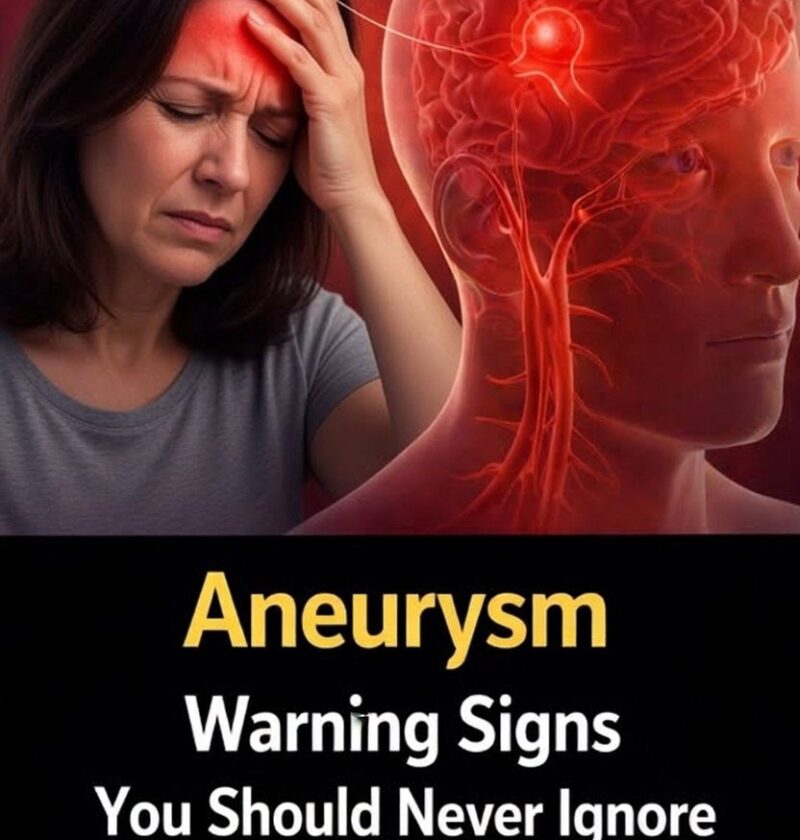
The phrase “Don’t dismiss these symptoms — they could be linked to an aneurysm” is usually used to raise awareness about a serious but often silent condition called an aneurysm—a weak, bulging area in a blood vessel that can rupture.
It’s important to understand two things:
- Most aneurysms cause no symptoms until they become large or rupture
- When symptoms do appear, they can be sudden and severe
What an aneurysm can be linked to
Common types include:
- Brain aneurysm (cerebral aneurysm)
- Aortic aneurysm (in the chest or abdomen)
Aneurysm
Warning symptoms that should never be ignored
1) Possible brain aneurysm warning signs
These may appear before or during rupture:
- Sudden, extremely severe headache (“worst headache of life”)
- Blurred or double vision
- Drooping eyelid
- Pain above or behind the eye
- Numbness or weakness on one side of the face or body
- Seizure or confusion
If rupture happens → it can cause sudden loss of consciousness or stroke-like symptoms.
2) Possible abdominal or chest aneurysm signs
Often silent, but may include:
- Deep, persistent pain in abdomen or back
- Pulsating feeling in the abdomen
- Chest pain or pressure (for chest aneurysm)
- Shortness of breath (in some cases)
When it becomes an emergency
Seek urgent medical care if there is:
- Sudden severe headache unlike any before
- Sudden collapse or fainting
- Sudden severe chest, back, or abdominal pain
- Sudden neurological symptoms (weakness, speech difficulty)
These can indicate rupture, which is life-threatening.
Important reality check
Most people who feel mild headaches, dizziness, or fatigue do NOT have an aneurysm. These symptoms are common and usually caused by less serious conditions like:
- Migraine
- High blood pressure
- Stress or anxiety
- Eye strain
But the key issue is pattern + severity + sudden onset, not everyday mild symptoms.