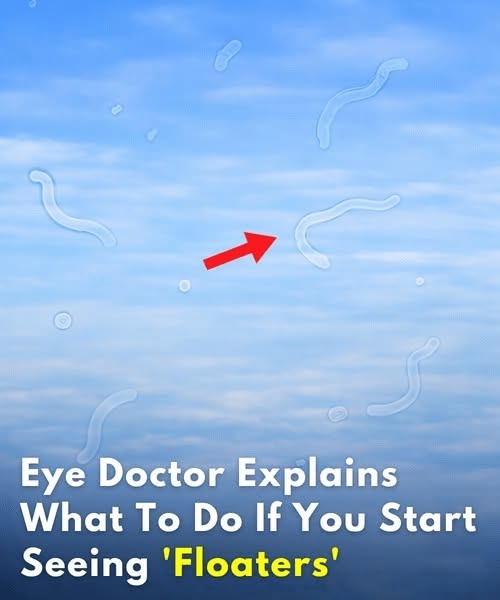
Eye floaters are small spots, threads, or cobweb-like shapes that drift across your vision. They’re usually caused by tiny clumps in the gel inside the eye.
These are commonly related to the Posterior vitreous detachment, where the vitreous (gel inside the eye) naturally changes with age.
What to do if you start seeing eye floaters
1. Don’t panic (most are harmless)
In most cases, floaters are:
- Age-related
- Harmless
- More noticeable in bright light or against white backgrounds
Many people learn to ignore them over time.
2. Monitor your symptoms carefully
Pay attention to whether floaters are:
- Sudden or gradual
- Increasing in number
- Affecting one eye or both
A few floaters that remain stable are usually not dangerous.
3. Watch for warning signs (important)
Seek urgent eye care if you notice:
- A sudden shower of many floaters
- Flashes of light (like camera flashes)
- A dark shadow or “curtain” in your vision
- Sudden loss of side vision
These can signal:
- Retinal tear
- Retinal detachment (medical emergency)
4. Get an eye exam
An optometrist or ophthalmologist can:
- Dilate your pupils
- Check the retina
- Rule out serious conditions
Even if floaters are harmless, a baseline exam is often recommended when they first appear.
5. Treatment (only if severe)
Most floaters don’t need treatment. In rare, severe cases:
- Laser vitreolysis (breaks up floaters)
- Vitrectomy surgery (removes vitreous gel; only for extreme cases due to risks)
6. Practical coping tips
- Move your eyes up and down to shift floaters out of view temporarily
- Use good lighting
- Avoid staring at bright blank backgrounds for long periods
Bottom line
Most eye floaters are normal and harmless, especially with aging, but sudden changes or flashes of light should never be ignored.
If you want, tell me:
- Your age
- Whether floaters appeared suddenly or slowly
- If you also see flashes
I can help you judge how urgent it is.