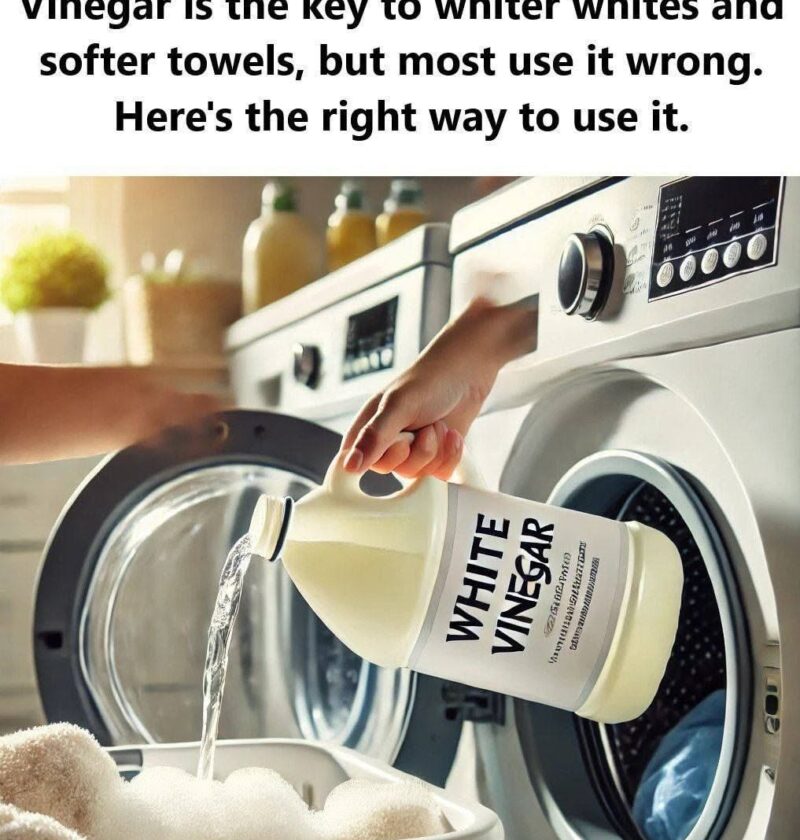
Vinegar is one of those household staples that gets hyped for “miracle cleaning,” yet most people either underuse it—or use it in ways that reduce its effectiveness.
Used correctly, it can help keep whites brighter, towels softer, and even reduce that lingering “musty laundry smell.” Used incorrectly, it can do almost nothing—or worse, damage fabrics and appliances over time.
Let’s break it down properly.
🧴 The real secret weapon: vinegar
Vinegar
White distilled vinegar contains acetic acid, which helps break down:
- Detergent residue
- Mineral deposits from hard water
- Odor-causing bacteria buildup
That’s why it’s often used in laundry—not as a detergent replacement, but as a booster and rinse aid.
❌ The most common mistakes people make
1. Pouring it directly onto clothes
This can weaken fibers or cause uneven bleaching over time.
2. Mixing it with bleach
This is dangerous. It can release toxic chlorine gas. Never combine them.
3. Using too much
More vinegar does NOT mean cleaner clothes. It can actually leave a lingering smell if overused.
4. Replacing detergent with vinegar
Vinegar cleans residue—it does not properly remove heavy dirt or oils.
✅ The right way to use vinegar in laundry
👕 For softer towels
Add ½ cup white vinegar in the fabric softener compartment during the rinse cycle.
Why it works:
It removes detergent buildup that makes towels stiff and scratchy.
🤍 For brighter whites
Soak white clothes in warm water + 1 cup vinegar for 30–60 minutes before washing.
Why it works:
It helps loosen dinginess caused by hard water and residue buildup.
👃 For odor removal
Add ½ cup vinegar directly into the wash cycle (not with bleach).
Best for:
- Gym clothes
- Socks
- Musty storage-smelling fabrics
🚿 Bonus use: washing machine cleaner
Once a month, run an empty hot cycle with 2 cups vinegar to remove buildup inside the drum and pipes.
This helps reduce:
- Odors
- Mold
- Detergent sludge