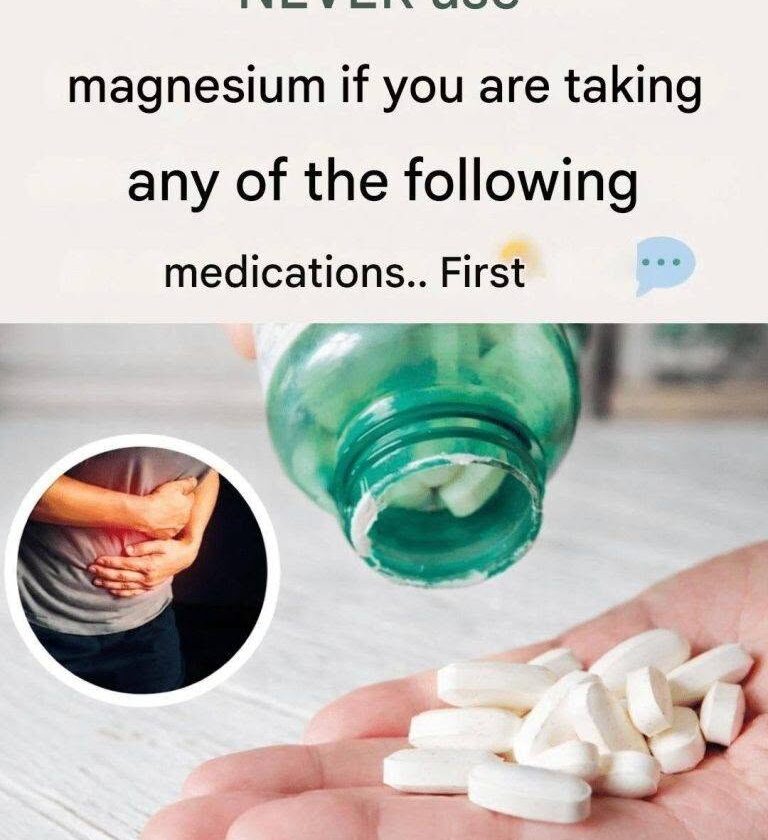
It looks like you’re starting a warning about magnesium, but the claim “NEVER use magnesium if you are taking any of the following…” is often overstated online.
Magnesium is generally safe, but it can interact with certain medications or conditions.
⚠️ When magnesium can cause issues
Magnesium supplements can interfere with absorption or effectiveness of some drugs:
1) Certain antibiotics
- Tetracyclines (e.g., doxycycline)
- Fluoroquinolones (e.g., ciprofloxacin)
👉 Magnesium can bind to them and reduce absorption.
2) Thyroid medication
- Levothyroxine
👉 Magnesium may reduce how much thyroid medicine your body absorbs if taken together.
3) Osteoporosis medications
- Bisphosphonates (e.g., alendronate)
👉 Magnesium can interfere with absorption if taken too close in time.
4) Blood pressure or heart medications (caution, not absolute ban)
- Calcium channel blockers or diuretics
👉 Usually not dangerous, but dosage and kidney function matter.
🧠 Important correction
There is no universal “NEVER take magnesium if…” rule.
Most interactions are:
- Timing issues (separate doses by 2–4 hours)
- Not absolute contraindications
⚠️ When magnesium should be avoided or monitored closely
- Kidney disease (risk of magnesium buildup)
- Severe heart conduction problems (rare cases)
- Very high-dose supplementation without medical advice
👍 Safe use tips
- Take magnesium away from other medications (2–4 hours gap)
- Stick to recommended daily doses
- Prefer food sources when possible (nuts, seeds, leafy greens)
🟢 Bottom line
Magnesium is not something you “never use” with most medications—but it does require smart timing and caution with specific drugs.
If you want, I can list the best types of magnesium (glycinate, citrate, oxide) and what each one is actually used for, because that part is usually more confusing than the interactions.