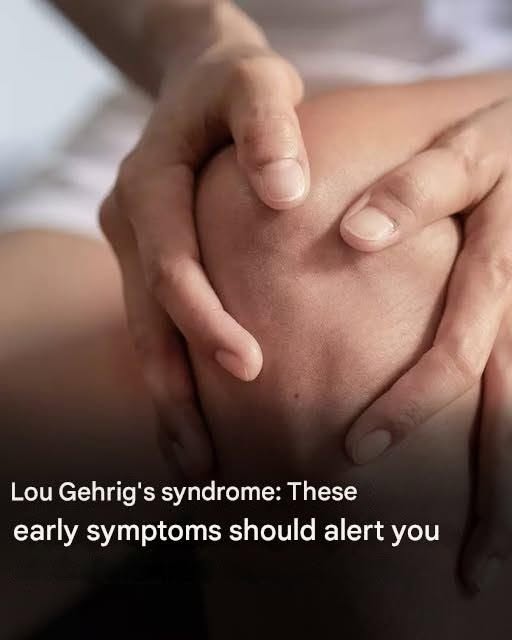
“Lou Gehrig’s syndrome” is another name for Amyotrophic Lateral Sclerosis (ALS). It’s a progressive nervous system disease that affects nerve cells in the brain and spinal cord, leading to loss of muscle control over time.
Early symptoms of ALS (what people often notice first)
- Muscle weakness (usually in one limb first)
- Trouble lifting objects
- Weak grip or dropping things
- Clumsiness or loss of coordination
- Frequent tripping or stumbling
- Difficulty doing fine tasks (buttoning clothes, writing)
- Muscle twitching (fasciculations)
- Small, visible muscle flickers under the skin
- Often in arms, legs, or tongue
- Muscle cramps or stiffness
- Especially in hands or legs
- Feeling tight or “locked” muscles
- Slurred or slow speech
- Words becoming harder to pronounce clearly
- Voice may sound strained or nasal
- Difficulty swallowing (early in some cases)
- Choking on food or liquids
- Feeling like food “sticks”
- Fatigue or heaviness in limbs
- Muscles tire more easily than normal
- Weakness in hand strength or grip
- Trouble opening jars or holding objects securely
- Foot drop (dragging the foot while walking)
- One of the early signs in leg-onset ALS
- Subtle breathing changes (later early stage)
- Mild shortness of breath during exertion
Important clarification:
- ALS usually starts slowly and asymmetrically (one hand, one foot, or one side first).
- It does not usually cause pain, numbness, or tingling early on—those symptoms often point to other conditions.
If someone has a few of these symptoms, it does not automatically mean ALS, because conditions like nerve compression, vitamin deficiencies, or thyroid problems can look similar.
If you want, I can also explain how doctors distinguish ALS from things like pinched nerves or Parkinson’s disease.