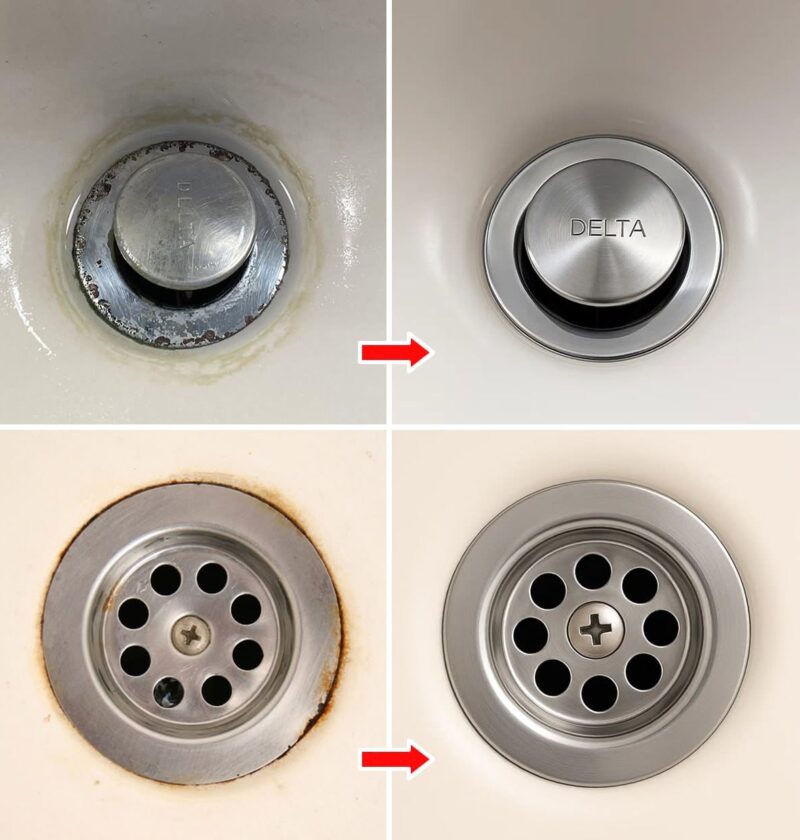
How to Remove Dark Stains Around Faucets: Ultimate Bathroom & Kitchen Cleaning Guide
Introduction: Why Dark Rings Form Around Faucets
Dark stains or blackish rings around faucets are a very common household problem in both kitchens and bathrooms. These stains not only make your sink area look dirty and unhygienic but can also become harder to remove if ignored for too long.
These marks usually appear due to a combination of:
- Hard water mineral buildup (calcium and magnesium deposits)
- Soap scum accumulation
- Mold and mildew growth in moist areas
- Rust particles from old pipes or fixtures
- Dirt and grease trapped around faucet bases
Over time, these elements mix together and form a stubborn dark ring that regular wiping cannot remove.
The good news is that with the right cleaning methods, household ingredients, and preventive care, you can completely restore your faucet area to a clean, shiny condition.
Understanding the Cause Before Cleaning
Before jumping into cleaning methods, it is important to understand what type of stain you are dealing with. Different causes require slightly different solutions:
1. Hard Water Deposits
These appear as white, gray, or dark crusty buildup. Common in areas with mineral-rich water.
2. Mold and Mildew
Usually black or dark green, often found in damp bathroom areas with poor ventilation.
3. Soap Scum
A sticky layer caused by soap mixing with minerals in water.
4. Rust Stains
Orange-brown discoloration caused by iron in water or corroded plumbing.
Identifying the cause helps you choose the most effective cleaning method.
Best Natural Methods to Remove Dark Stains Around Faucets
1. Vinegar Solution Method (Highly Effective for Hard Water Stains)
White vinegar is one of the most powerful natural cleaners for mineral buildup.
How to Use:
- Soak a cloth or paper towel in white vinegar
- Wrap it tightly around the faucet base
- Leave it for 30–60 minutes
- Scrub gently using an old toothbrush
- Rinse with warm water
Why It Works:
Vinegar contains acetic acid, which dissolves calcium and magnesium deposits.