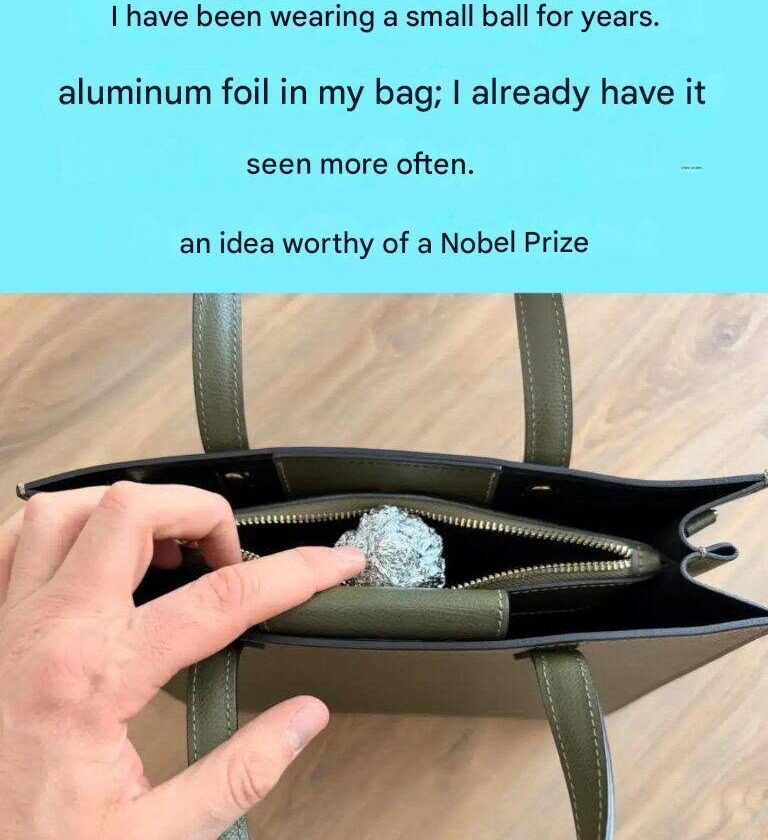
Wearing or carrying a ball of aluminum foil doesn’t have any known scientific or medical benefit, and it definitely isn’t Nobel-Prize territory.
Here’s what’s actually true:
Aluminum foil is just a metal sheet material.
- It reflects heat and light well
- It’s useful for cooking, insulation, and wrapping food
- It does not have any proven effect on the body through proximity or “energy” changes
Why people start believing ideas like this
This kind of claim usually spreads from:
- internet “energy healing” trends
- superstition about metals blocking radiation or “negative energy”
- misinterpretations of basic physics (like “metal reflects waves” → exaggerated into health claims)
But in reality:
- A foil ball in your bag doesn’t interact with your body in any meaningful biological way
- It doesn’t detox, protect, balance energy, or improve health
- It’s just inert metal unless used in a practical application (like wrapping food)
When aluminum does matter medically
Only in specific contexts:
- Medical devices (MRI safety issues with metal objects)
- Dental materials or lab settings
- Antacids and medications sometimes use aluminum compounds (not foil)
So if you’ve been carrying it as a “health or energy” tool, there’s no scientific support for that effect. If it’s just a habit or comfort object, it’s harmless—but it’s not doing anything measurable for your body.
If you want, I can break down where these “everyday object hacks” usually come from and how to quickly spot which ones are real vs. internet folklore.