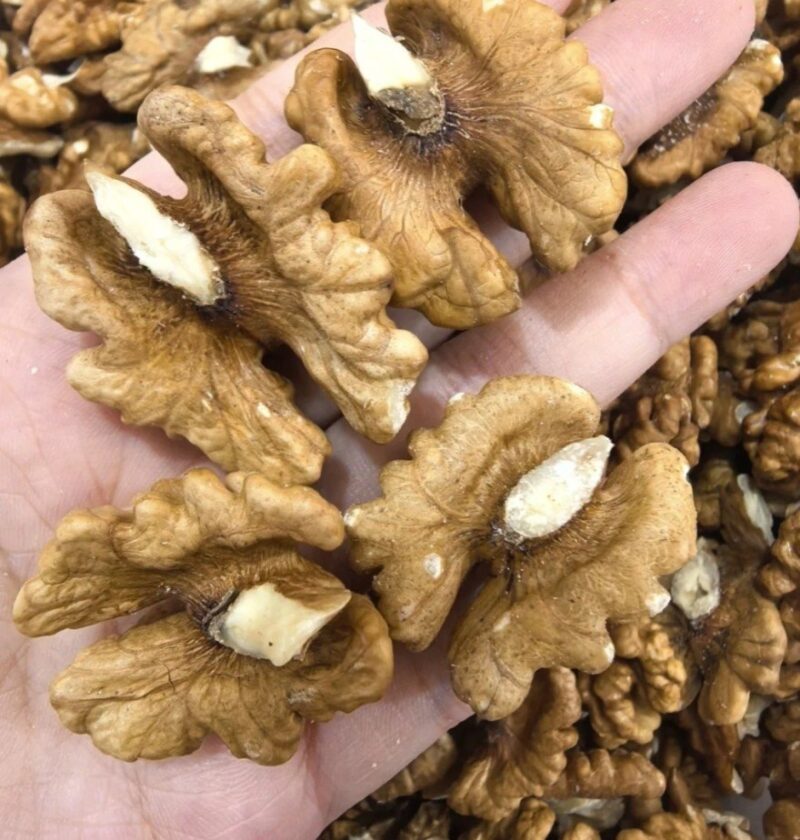
There’s solid evidence that regularly eating Walnut can benefit heart health, brain function, and long-term wellness — though headlines often exaggerate the effects.
Here’s what research actually supports:
Heart Health
Walnuts are rich in:
- omega-3 fatty acids (especially ALA)
- fiber
- antioxidants
- magnesium
Studies suggest they may help:
- lower LDL (“bad”) cholesterol
- improve blood vessel function
- reduce inflammation
- modestly lower blood pressure
The American Heart Association recommends nuts, including walnuts, as part of a heart-healthy diet.
Brain Function
Walnuts contain compounds linked to brain health:
- polyphenols
- vitamin E
- omega-3 fats
Some studies associate regular walnut intake with:
- better cognitive aging
- improved memory and processing speed in older adults
- reduced oxidative stress
The evidence is promising, but walnuts are not a “brain cure” or guaranteed dementia prevention.
Long-Term Health
Research has linked moderate nut consumption with:
- lower risk of cardiovascular disease
- better metabolic health
- improved satiety and weight management
- possible reduction in type 2 diabetes risk
Walnuts may also support gut microbiome diversity.
How Much?
Most studies use about:
- 1 ounce (28–30 g) daily
- roughly a small handful (about 7 whole walnuts)
Important Caveats
- Walnuts are calorie-dense, so portions matter.
- Salted or sugar-coated versions reduce the health benefit.
- Nut allergies can be serious.
- Eating walnuts alone won’t overcome smoking, inactivity, or a poor overall diet.
Best Ways to Eat Them
Try adding walnuts to:
- oatmeal
- yogurt
- salads
- smoothies
- whole-grain dishes
Pairing them with an overall Mediterranean-style eating pattern appears especially beneficial.