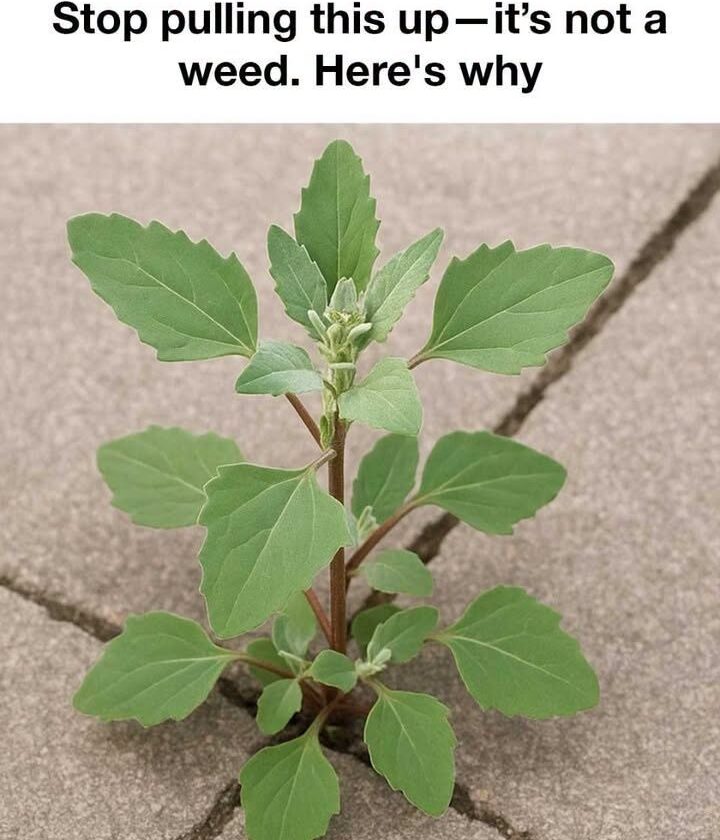
Here’s the real idea behind it:
🌿 “It’s not a weed” — what they usually mean
Many articles are talking about plants that:
- self-seed easily
- grow quickly in gardens or lawns
- look similar to common weeds
So people pull them out without realizing they might be:
- native plants
- pollinator-friendly species
- intentionally planted ornamentals
⚠️ Why this matters
Some “weed-like” plants are actually beneficial:
- support bees and butterflies
- improve soil health
- provide ground cover
But others really are invasive and can harm gardens.
So the key is not the slogan—but correct identification.
🧠 Common mistake
People often assume:
- fast-growing = weed
- wild-looking = unwanted
- spreading = bad
But in ecology, none of these are reliable definitions.
🌱 Examples of “confused plants”
Depending on region, plants often mistaken for weeds include:
- clover (soil-friendly, nitrogen fixing)
- dandelions (edible, pollinator food source)
- purslane (edible succulent)
- certain native wildflowers
But in some gardens, even these may still be unwanted depending on design goals.
🧾 Bottom line
There is no single rule like “stop pulling this plant—it’s not a weed.” It depends entirely on:
- location
- garden goals
- plant species
- how aggressively it spreads
If you want, you can send a photo of the plant you’re seeing in your garden, and I can help you identify whether it’s actually a weed, a useful plant, or something invasive.