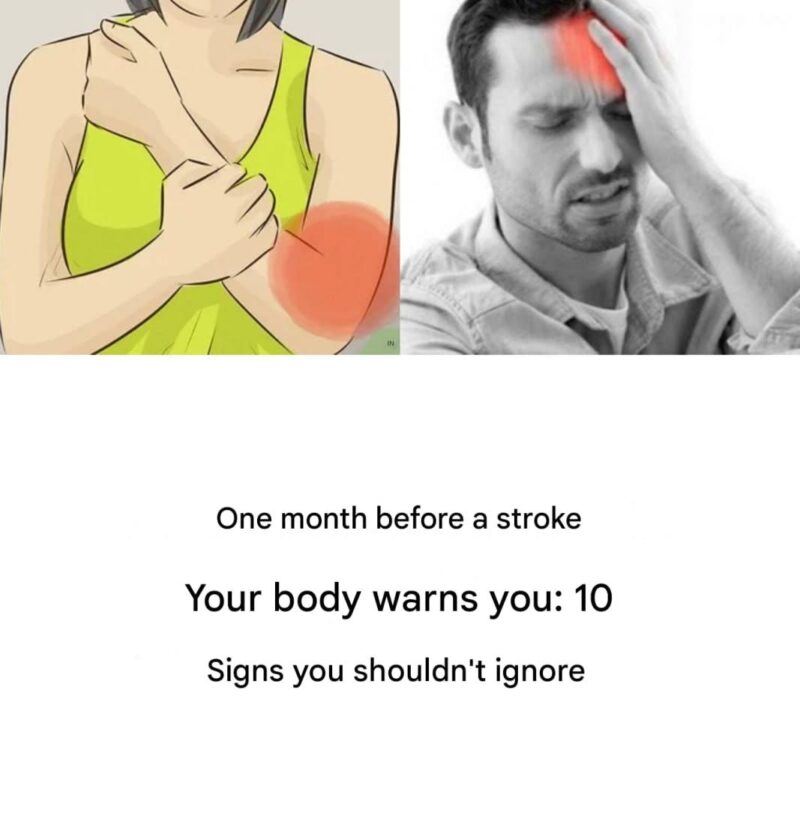
That headline is not medically reliable. It’s designed to sound urgent, but real medicine doesn’t support a fixed “10 signs one month before a stroke” rule.
A Stroke usually happens suddenly, although some people may have earlier warning episodes.
🧠 What can happen before a stroke (in some cases)
1. Transient ischemic attack (TIA)
A “mini-stroke” that can happen days or weeks before a full stroke:
- sudden weakness or numbness (one side)
- speech difficulty
- vision loss or disturbance
- symptoms resolve within minutes to hours
2. Short warning episodes (not always present)
Some people may notice:
- brief dizziness
- temporary confusion
- mild weakness episodes
But many strokes happen without any warning at all.
🚨 Real stroke symptoms (emergency signs)
Use FAST:
- F – Face drooping
- A – Arm weakness
- S – Speech difficulty
- T – Time to get emergency help
Other urgent signs:
- sudden vision loss
- severe imbalance
- sudden severe headache
❌ What’s misleading about the viral claim
- There is no confirmed “10-symptom, 1-month warning system”
- Symptoms are not predictable or consistent
- Many “early signs” lists online include normal sensations (fatigue, headaches, tingling) that are not specific to stroke
✔️ What actually matters more than symptom lists
Stroke risk is better predicted by long-term factors:
- high blood pressure
- diabetes
- smoking
- high cholesterol
- obesity
- heart rhythm problems
Bottom line
A stroke may have no warning, or only short-lived warning events (TIAs). Viral “10 signs one month before” posts are oversimplified and misleading.
If you want, I can explain how to actually reduce stroke risk in daily life in a simple checklist.