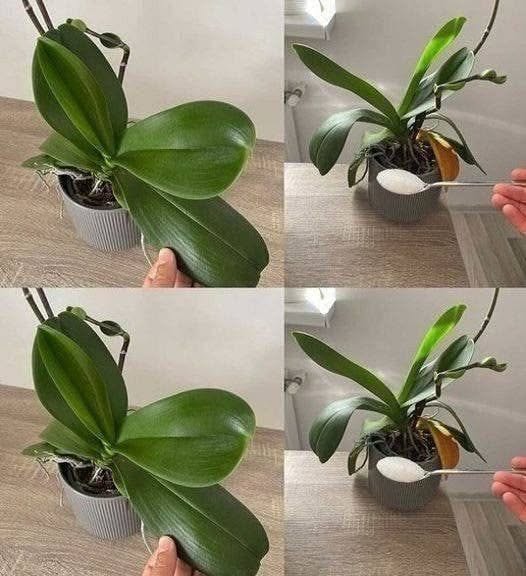
Understanding Orchids: Why They Don’t Bloom Continuously
Orchids are among the most elegant flowering plants, known for their long-lasting blooms and exotic appearance. However, unlike many common houseplants, orchids do not bloom continuously throughout the year.
Instead, most orchid species follow a natural cycle:
- Growth phase (leaves and roots develop)
- Rest phase (energy storage)
- Blooming phase (flowers appear for weeks or months)
After flowering, orchids enter a recovery period before producing new blooms again. This cycle is completely natural and cannot be overridden by excessive fertilizer.
The Truth About “One Tablespoon Fertilizer for Continuous Blooming”
Viral gardening tips often suggest that a single spoonful of fertilizer can keep orchids blooming nonstop. However, this is misleading.
Why this is not accurate:
- Orchids require balanced nutrients over time, not one-time feeding
- Over-fertilizing can burn roots and damage the plant
- Blooming depends on light, temperature, humidity, and rest cycles, not just fertilizer
Fertilizer supports growth—but it does not force continuous flowering.
How Orchids Actually Use Nutrients
Orchids absorb nutrients slowly through their roots and sometimes through their leaves. They require:
- Nitrogen (leaf growth)
- Phosphorus (flower development)
- Potassium (overall plant strength)
These nutrients must be provided in very diluted form, because orchid roots are sensitive and easily damaged.
Best Fertilizer Approach for Orchids
Instead of strong doses, orchid experts recommend a gentle routine:
1. Weak, Regular Feeding
Orchids prefer diluted fertilizer:
- “Weakly, weekly” approach is commonly used
- Fertilizer is often diluted to 1/4 or 1/2 strength
2. Balanced Fertilizer Types
A balanced formula (such as 20-20-20 or orchid-specific fertilizer) is typically used during growth phases.
3. Reduced Feeding During Dormancy
When orchids are not actively growing or blooming, fertilizer use is reduced or paused.