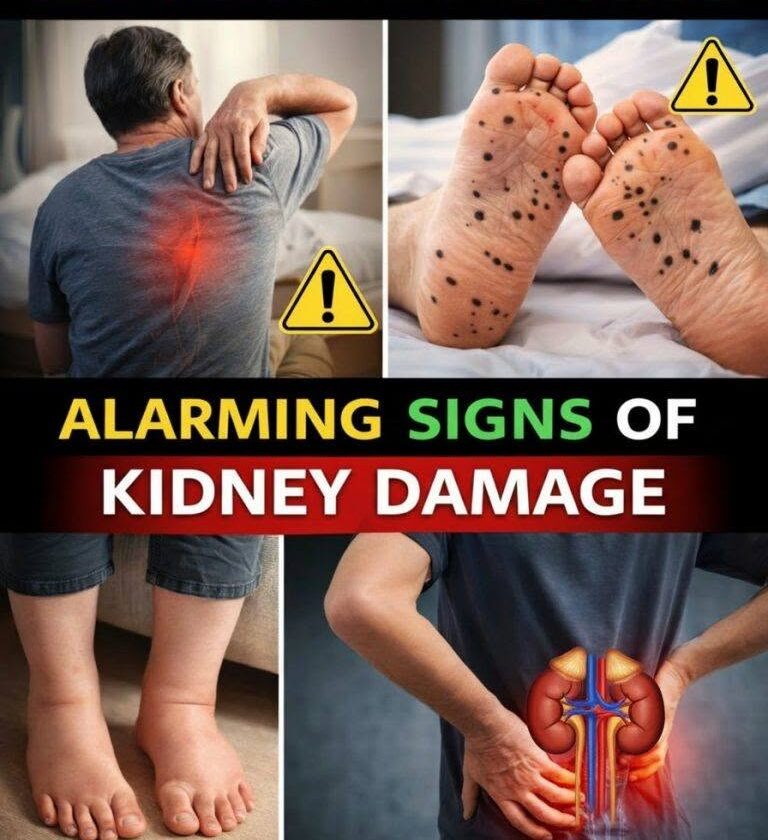
Here are important warning signs of worsening kidney function, often linked to Chronic Kidney Disease:
🚨 9 warning signs your kidneys may be struggling
1. 🧍 Persistent fatigue and weakness
When kidneys fail to filter waste, toxins build up in the blood, causing constant tiredness.
2. 💧 Swelling (edema)
- Feet, ankles, hands, or face puffiness
- Caused by fluid retention and salt imbalance
3. 🚽 Changes in urination
- Foamy urine (protein loss)
- More frequent urination at night
- Reduced urine output in advanced stages
4. 🩸 Blood in urine
May appear pink, red, or cola-colored—needs immediate evaluation.
5. 😮💨 Shortness of breath
Extra fluid can build up in lungs, or anemia can reduce oxygen delivery.
6. 🤢 Nausea, vomiting, or loss of appetite
Waste buildup affects digestion and appetite regulation.
7. 🧠 Difficulty concentrating (“brain fog”)
Toxins in the blood can affect mental clarity.
8. 🧴 Dry, itchy skin
Mineral and waste imbalance can irritate the skin.
9. 💓 High blood pressure that is hard to control
Kidneys and blood pressure are closely linked—damage can worsen hypertension.
🧪 Important tests doctors use (not home “avoid dialysis” tests)
If kidney disease is suspected, doctors usually check:
- Blood creatinine & eGFR (main kidney function marker)
- Urine albumin/protein test
- Urinalysis (routine urine test)
- Blood urea (BUN)
- Ultrasound of kidneys (if needed)
⚠️ Key truth
Dialysis is only needed in advanced kidney failure, not from early warning signs. Many people slow progression significantly with:
- Blood pressure control
- Diabetes management
- Hydration balance
- Avoiding unnecessary painkillers (NSAIDs)
If you want, I can explain early-stage kidney damage signs vs late-stage, or how to interpret an eGFR report in simple terms.