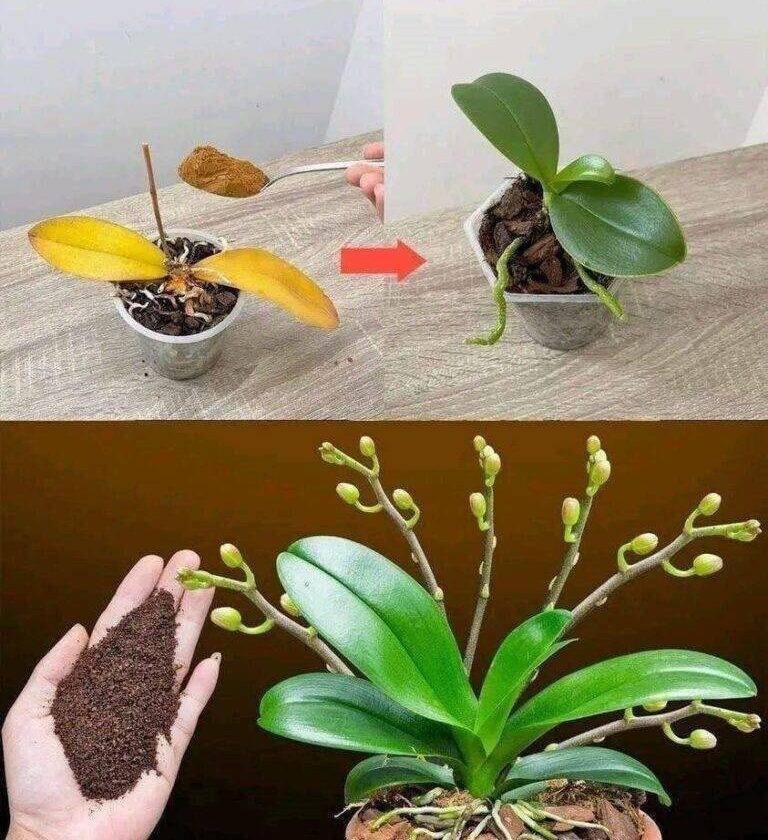
That headline is another clickbait-style gardening claim.
The idea that “just a teaspoon” of something will make an Orchid suddenly bloom massively is not scientifically reliable. Orchids don’t respond to quick “magic boosters”—they respond to consistent care over time.
🌸 What really controls orchid blooming
Orchids usually bloom based on:
🌿 1. Light (most important factor)
- Bright, indirect sunlight
- Too little light → no flowers
- Too much sun → burnt leaves
💧 2. Watering
- Overwatering is the #1 killer
- Roots must dry slightly between watering
🌡️ 3. Temperature changes
Many orchids bloom when there is:
- A slight drop in night temperature
- Stable daytime warmth
🌱 4. Nutrition (fertilizer)
Orchids need very light feeding:
- Balanced orchid fertilizer (weak dose)
- Usually every 2–4 weeks in growing season
❌ About “a teaspoon miracle tricks”
These viral tips often suggest things like:
- sugar water
- milk
- banana water
- coffee
- baking soda
Problems with these:
- They don’t reliably trigger blooming
- They can cause root rot or fungal growth
- They can attract pests or bacteria
So instead of helping, they often harm the plant long-term.
👍 What actually makes orchids bloom faster
If you want more flowers:
- Improve light exposure (indirect sun near a window)
- Use proper orchid fertilizer (low concentration)
- Ensure good airflow around roots
- Give slight night temperature drop if possible
- Repot only when necessary (orchids like being slightly root-bound)
🧠 Simple truth
Orchids are not “instant bloom” plants. They behave more like a slow cycle:
Healthy care → strong roots → energy storage → blooming
If you want, tell me your orchid type or show a picture, and I can guide you on how to make your specific plant bloom again step by step.