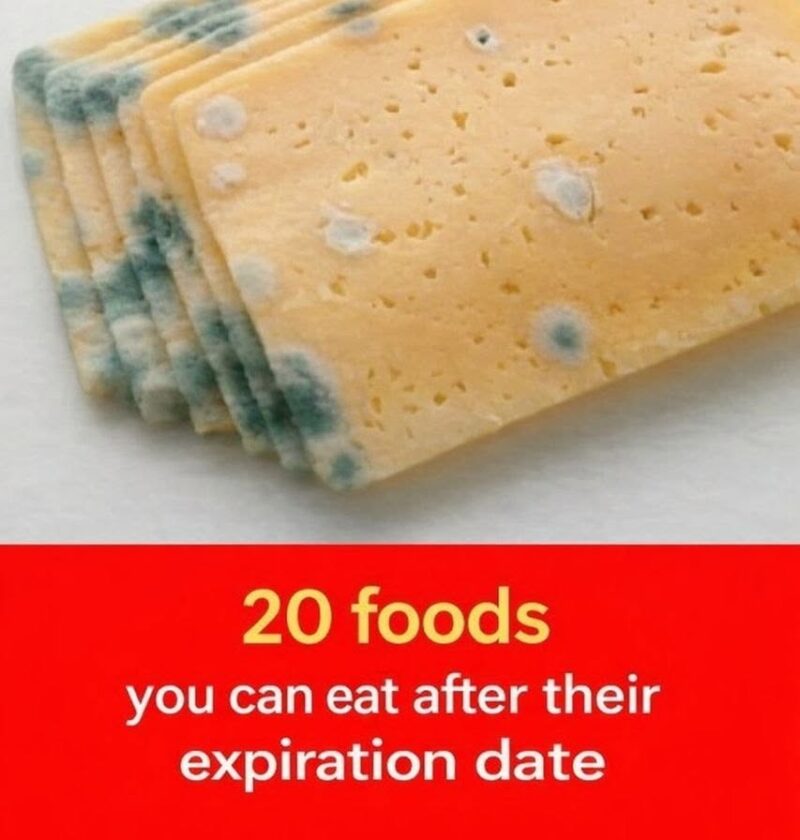
That headline is partly based on a real idea—but it’s often exaggerated.
First, “expiration date” can mean different things:
- “Best before” → quality may decline, but food is often still safe
- “Use by” → more important for safety (especially meat, dairy, fish)
Many foods can still be safe after the “best before” date if stored properly, but you still need to check smell, appearance, and storage conditions.
Here are 20 foods that are often safe past their “best before” date (in good storage conditions):
Pantry staples
- Rice
- Pasta
- Oats
- Flour
- Sugar
- Salt
- Dried beans and lentils
- Cereal (may go stale, but often safe)
Canned and packaged foods
- Canned beans
- Canned vegetables
- Canned tuna
- Peanut butter (may separate but often safe)
- Honey (almost never truly spoils if sealed)
- Soy sauce
Refrigerated items (case-dependent)
- Eggs (often safe a bit past date if properly refrigerated)
- Hard cheese (can still be safe after trimming mold)
- Butter (may go rancid but often lasts longer than date)
Frozen foods
- Frozen vegetables
- Frozen meat (quality may drop but still safe if continuously frozen)
- Frozen fruits
Important safety rules
Even if a food is on this list, do NOT eat it if you notice:
- Bad smell
- Mold (except in cases like hard cheese where trimming is sometimes safe)
- Slimy texture
- Bulging cans or leaks
- Off taste
Key takeaway
Many foods don’t “expire” exactly on the printed date—they decline in quality first, not instantly become dangerous.
If you want, I can also tell you which foods are never safe to eat past their date (those are the important ones people miss).