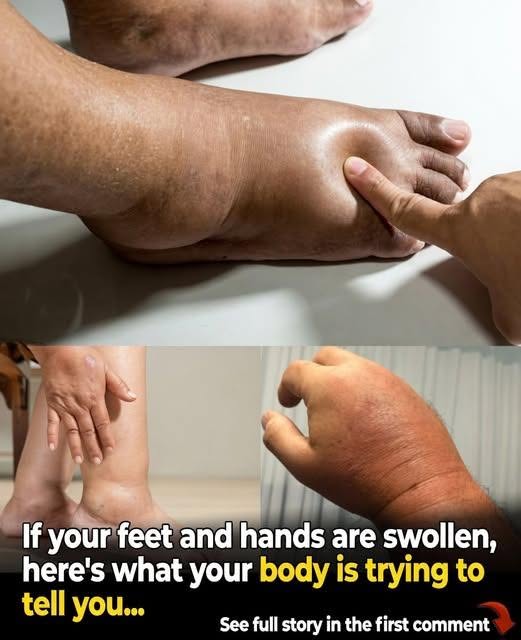
Swelling in the hands and feet (called edema) is a symptom, not a disease. It can be harmless in some cases—but sometimes it signals heart, kidney, or circulation problems.
Here are the common causes and hidden dangers:
🟢 Common (usually harmless) causes
1) Heat and weather
Hot weather makes blood vessels expand, causing fluid to pool in the hands and feet.
2) Standing or sitting too long
Gravity causes fluid to collect in the lower limbs.
3) High salt intake
Too much sodium makes the body retain water.
4) Pregnancy
Hormonal changes and pressure on veins can cause mild swelling.
5) Minor injuries or overuse
Sprains or repetitive activity can cause localized swelling.
🟡 Medication-related causes
Some medicines can cause fluid retention, including:
- Blood pressure medications (like calcium channel blockers)
- Steroids
- Anti-inflammatory drugs
🔴 Hidden (more serious) causes
1) Heart problems
When the heart doesn’t pump efficiently, fluid can build up in the legs and feet.
2) Kidney disease
Damaged kidneys may not remove excess fluid properly.
3) Liver disease
Low protein levels can lead to fluid leakage into tissues.
4) Venous insufficiency
Veins in the legs struggle to return blood to the heart.
5) Blood clots (deep vein thrombosis)
Usually causes swelling in one leg, often with pain and warmth.
🚨 Warning signs — seek medical help if you have:
- Sudden or severe swelling
- Swelling in only one leg
- Shortness of breath or chest pain
- Swelling with fatigue or weight gain
- Pain, redness, or warmth in the limb
🧠 Key takeaway
Mild swelling is often lifestyle-related, but persistent or sudden swelling can be a sign of heart, kidney, or circulation disease and should not be ignored.
If you want, I can also explain:
- How to reduce swelling at home safely
- Or how to tell heart-related swelling vs kidney-related swelling in simple terms