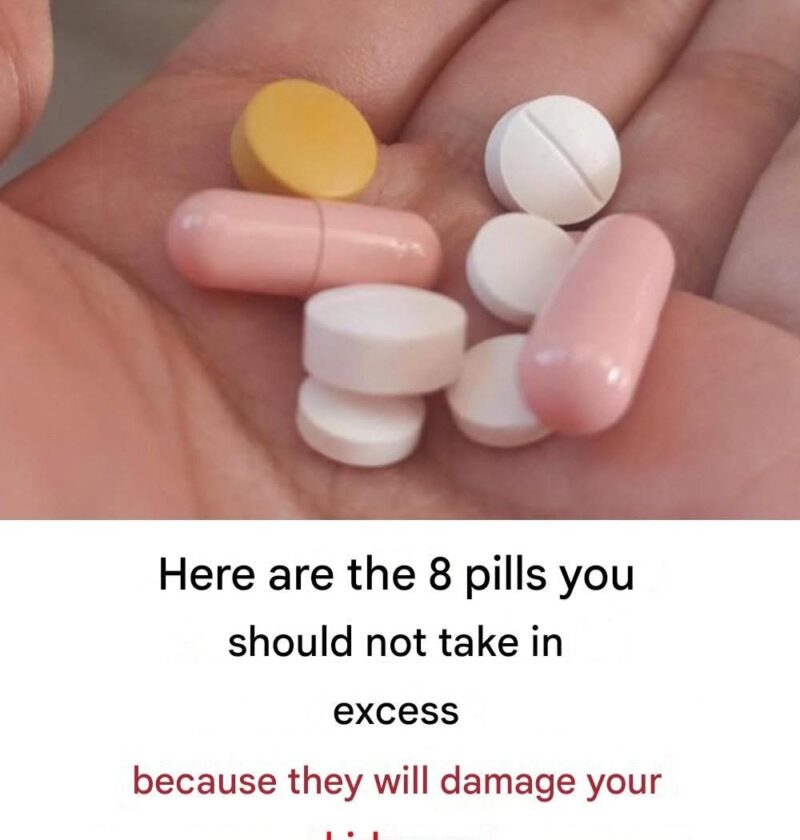
Headlines like “8 pills you should never take” are usually exaggerated. The reality is more nuanced: some medications can stress or damage the kidneys, especially with high doses, long-term use, dehydration, or existing kidney disease—but they are still safe and necessary when used correctly under medical supervision.
Here are 8 types of medicines most often linked to kidney risk:
1) Common painkillers (NSAIDs)
Includes ibuprofen and related drugs like Ibuprofen
- Can reduce blood flow to the kidneys if overused
- Higher risk in older adults or dehydration
2) Naproxen (another NSAID)
Naproxen
- Similar kidney effects as ibuprofen
- Risk increases with long-term or frequent use
3) Strong antibiotics (aminoglycosides)
Example: Gentamicin
- Can be directly toxic to kidney cells
- Usually used only in serious infections with monitoring
4) Certain blood pressure medicines (temporary effect)
Example: Lisinopril
- Often protective long-term
- May slightly reduce kidney filtration at first or in dehydration
5) Diuretics (“water pills”)
Example: Furosemide
- Can cause dehydration or electrolyte imbalance if not monitored
- Indirectly affects kidney function
6) Lithium (psychiatric medication)
Lithium
- Long-term use can affect kidney function
- Requires regular blood tests
7) Proton pump inhibitors (acid reflux meds)
Example: omeprazole class
- Long-term use has been linked in some studies to chronic kidney disease risk
- Risk is low but monitored with prolonged use
8) Contrast dyes (for CT scans)
- Not a pill, but important kidney-related exposure
- Can temporarily affect kidney function in high-risk patients
🧠 Key truth most headlines ignore
- These drugs are not dangerous when used properly
- Risk depends on:
- Dose
- Duration
- Hydration
- Existing health conditions
🚨 When kidney risk becomes more serious
- Diabetes or high blood pressure
- Older age
- Dehydration
- Existing kidney disease
- Mixing multiple kidney-stressing drugs