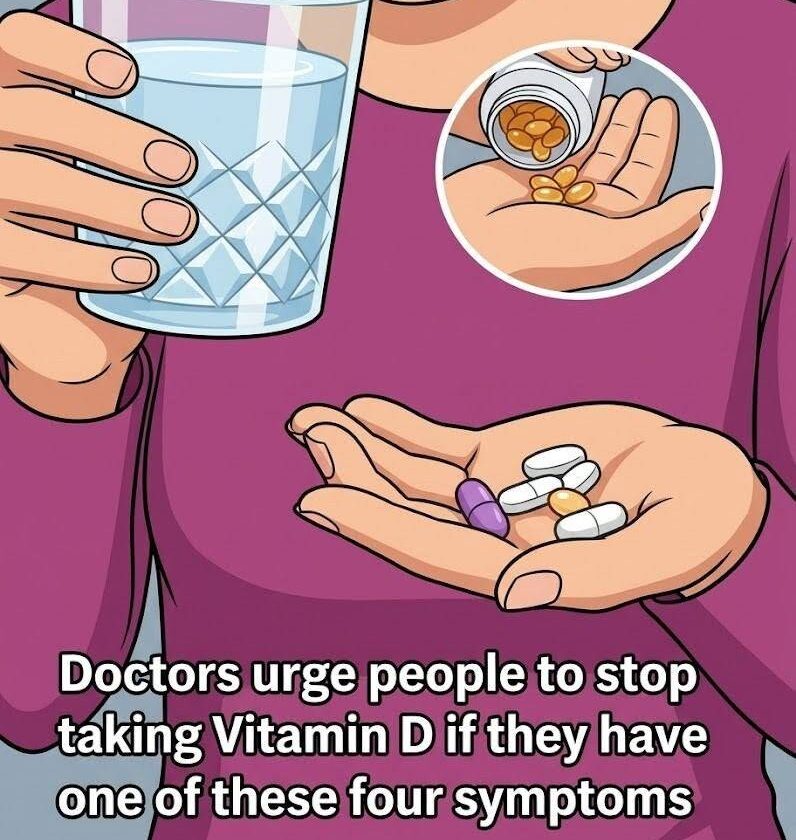
That headline is another viral “medical scare” style post, and it’s misleading as written.
Doctors do not recommend that most people “stop vitamin D immediately” based on a generic list of symptoms. Vitamin D is essential, and problems mainly occur only in cases of excessive dosing over time, not normal use.
When vitamin D can actually become harmful
Vitamin D toxicity (hypervitaminosis D) is rare and usually happens from taking very high doses for weeks or months—far above recommended amounts.
The real issue is high calcium levels in the blood, not vitamin D itself.
Symptoms that can suggest too much vitamin D
If someone is truly overdosing, symptoms may include:
- Persistent nausea or vomiting
- Loss of appetite
- Excessive thirst and frequent urination
- Weakness, fatigue, or confusion
- Constipation or abdominal pain (sometimes)
These happen because calcium builds up in the body.
Important reality check
- Normal supplementation (like 600–2000 IU daily for many adults) is generally safe.
- Toxicity usually involves very high doses (often 10,000+ IU daily for long periods) or misuse of high-dose injections/tablets.
- Symptoms like fatigue or stomach upset are common and non-specific, and are far more often caused by other issues—not vitamin D.
What you should actually do
Instead of stopping vitamin D abruptly based on a post:
- Only adjust supplements if a blood test (25-OH vitamin D + calcium) shows a problem
- Talk to a healthcare professional if you’re on high doses or have symptoms
- Avoid “megadose” self-medication without supervision
Bottom line
This type of post mixes real medical concepts with exaggeration. Vitamin D is not something most people need to fear—but overdosing without guidance is not safe.
If you want, tell me your dose and symptoms (if any), and I can help you assess whether it sounds normal or worth checking.