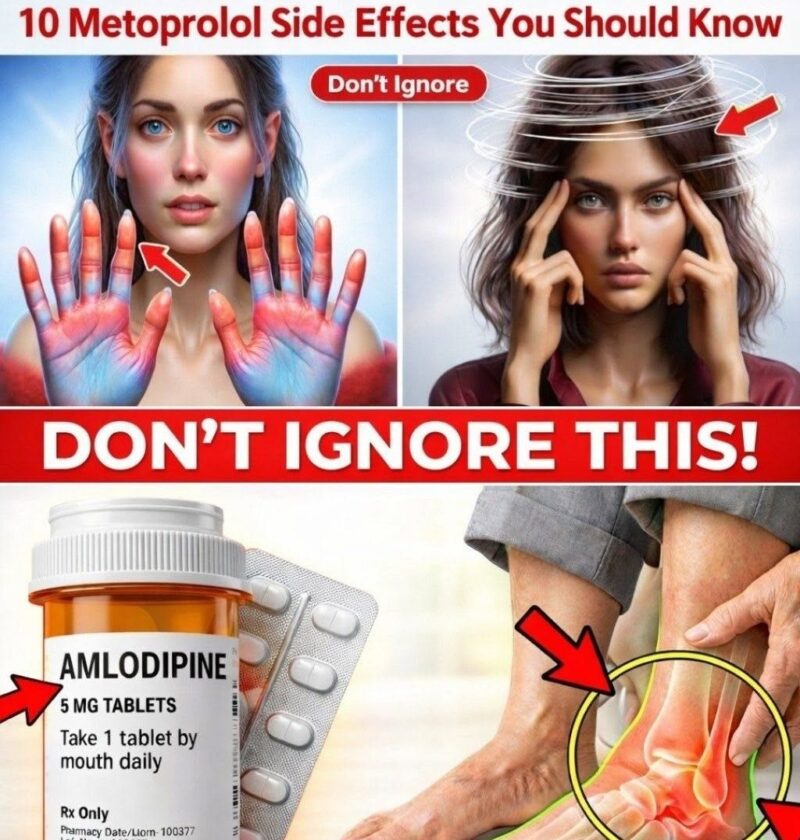
That headline is again sensationalized. There’s nothing a doctor is “praying you don’t discover.” Side effects of Metoprolol are well-known, studied, and routinely discussed with patients.
Here are the 10 real, medically recognized side effects:
1. Fatigue / low energy
Very common, especially when starting treatment.
2. Dizziness or lightheadedness
Often due to lowered blood pressure.
3. Slow heart rate (bradycardia)
An expected effect; doctors monitor it.
4. Cold hands and feet
Reduced blood flow to extremities.
5. Shortness of breath (in sensitive individuals)
More likely in people with asthma or lung disease.
6. Sleep problems or vivid dreams
Some people notice changes in sleep patterns.
7. Mood changes (rare)
May include low mood or depression in some cases.
8. Digestive upset
Nausea, stomach discomfort, or diarrhea.
9. Reduced exercise tolerance
You may tire more easily during physical activity.
10. Sexual side effects
Lower libido or erectile dysfunction in some people.
⚠️ Rare but important warning signs
Contact a doctor urgently if you have:
- Fainting or severe dizziness
- Very slow or irregular heartbeat
- Worsening shortness of breath
- Allergic reaction (swelling, rash)
🧠 Key reality check
- Side effects vary widely by dose and individual response
- Many improve after the first 1–2 weeks
- Benefits (blood pressure control, heart protection) often outweigh risks
✔️ Bottom line
Metoprolol is a widely used, well-understood heart medication. The “hidden danger” framing is misleading—this is standard, managed medical information.
If you want, I can explain how to tell if your symptoms are normal adjustment vs. a reason to change medication.