Flies are one of the most common household pests, and they tend to appear even in clean homes. The most frequent types include house flies and fruit flies, both of which are attracted to food sources, moisture, and organic waste.
You may notice them increasing in number around:
- Kitchen counters
- Fruit bowls
- Garbage bins
- Sink drains
- Open drinks or food containers
Even a small amount of exposed sweetness or fermentation is enough to attract them quickly.
Flies reproduce rapidly, which is why a small issue can turn into a noticeable infestation within days. Female fruit flies, for example, can lay hundreds of eggs at a time, especially in warm indoor environments.
Because of this fast reproduction cycle, controlling them early is extremely important.
Why Homemade Fly Traps Work So Well
DIY fly traps are surprisingly effective because they use one simple principle: attraction and containment.
Flies are naturally drawn to:
- Sweet smells (sugar, fruit juice, ripe fruit)
- Fermented odors (vinegar, overripe food)
- Moist environments
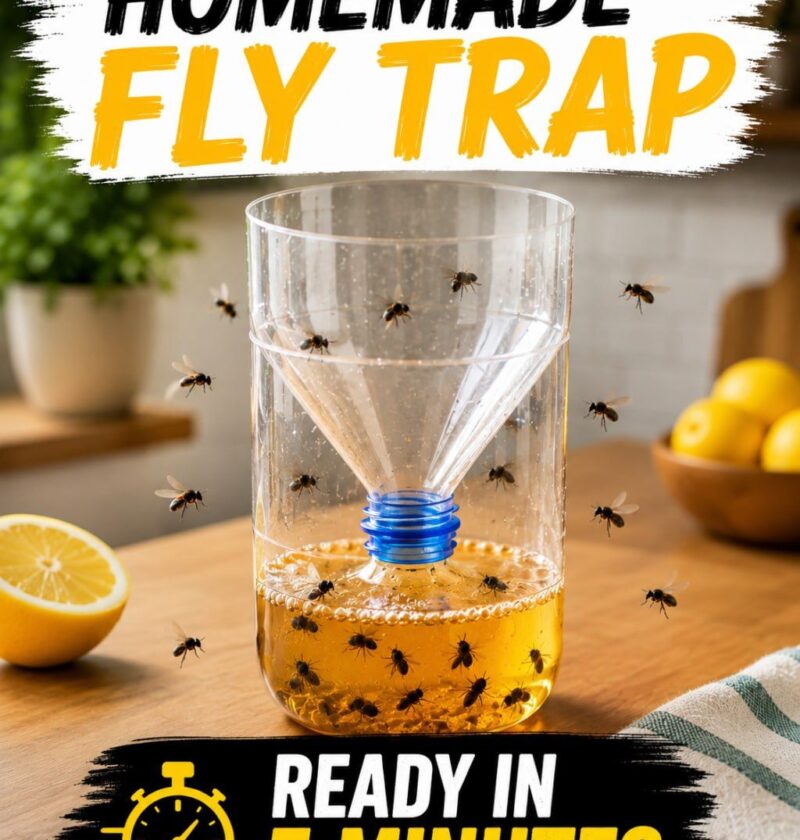
Once they enter the trap, a simple mechanism prevents them from escaping.
Unlike chemical sprays, which only kill visible flies temporarily, traps target the source of the problem by continuously attracting and capturing new flies.
This makes them one of the most practical long-term solutions for kitchens and homes.
The Science Behind Fly Attraction
Flies rely heavily on their sense of smell. They can detect food odors from a surprising distance. Fermenting substances like vinegar or sugar water mimic the smell of decaying organic matter, which is a primary food source for them.
Once inside a container, flies become disoriented and struggle to escape, especially when:
- The surface is slippery
- The opening is narrow
- The scent is stronger inside than outside
Adding dish soap breaks the surface tension of liquids, making it difficult for flies to land or escape once they touch the liquid.
This combination of smell attraction and physical trapping is what makes homemade fly traps highly effective.
Common Household Ingredients That Attract Flies
Most DIY fly traps use ingredients already available in your kitchen. These include:
1. Apple Cider Vinegar or Regular Vinegar
One of the strongest attractants due to its fermented smell.
2. Sugar or Sweet Syrup
Enhances attraction for fruit flies.
3. Dish Soap
Breaks surface tension and traps flies upon contact.
4. Water
Used for dilution and filling the container.
5. Fruit Scraps (Optional)
Banana peel or overripe fruit increases effectiveness.
6. A Container
Such as a jar, bowl, bottle, or cup.
Where Flies Usually Come From in Homes
Understanding the source helps improve results. Common breeding areas include:
- Overripe fruits left uncovered
- Dirty dishes left overnight
- Trash bins without lids
- Wet mop buckets
- Sink drains with food residue
Even if you eliminate visible flies, eggs may still be present in hidden damp areas.
Why Chemical Sprays Are Not Always the Best Option
Many people immediately use insect sprays, but these have limitations:
- They kill only visible flies
- They may not reach breeding sources
- Strong chemical smell indoors
- Temporary results only
In contrast, homemade traps continuously reduce the population without chemicals.
This makes them especially useful in kitchens, dining areas, and homes with children or pets.
Different Types of Homemade Fly Traps
There are several variations depending on what you have available:
1. Jar Trap
A simple container filled with attractant liquid.
2. Plastic Bottle Funnel Trap
A bottle cut and inverted to create a one-way entry.
3. Bowl Cover Trap
A bowl covered with plastic wrap and small holes.
4. Open Dish Trap
Shallow dish with sweet liquid and soap.
All of these rely on the same principle: lure and trap.
Why This Method Works in Just Minutes
The reason this DIY method is so popular is because:
- Setup takes less than 5 minutes
- Ingredients are readily available
- No special tools required
- Immediate attraction begins once placed
Flies typically start entering the trap within minutes of placement, especially if placed near problem areas like fruit bowls or trash bins.
Best Placement Areas for Maximum Effectiveness
Placement plays a major role in success. Ideal locations include:
- Kitchen countertops
- Near fruit storage
- Beside garbage bins
- Near sink drains
- Dining table corners
Avoid placing traps in completely open outdoor wind-heavy areas, as the scent may disperse too quickly.
How Often Should You Replace the Trap?
For best results:
- Replace every 1–2 days during heavy infestation
- Refresh every 3–4 days for mild fly presence
- Clean container before refilling
Over time, the liquid becomes saturated and less effective at attracting flies.
Why Flies Keep Coming Back
Even after trapping visible flies, new ones may appear due to:
- Hidden eggs in fruit waste
- Drain breeding sites
- Outdoor flies entering through windows
- Garbage not sealed properly
This is why consistent trapping combined with cleanliness is essential.
Natural Fly Control Tips to Prevent Infestation
Along with traps, these habits help reduce fly activity:
- Keep fruits refrigerated or covered
- Empty trash daily
- Clean kitchen surfaces regularly
- Fix leaking pipes or moisture issues
- Cover food immediately after cooking
Prevention is just as important as trapping.
Advantages of Homemade Fly Traps
DIY traps are widely used because they are:
- Low cost
- Chemical-free
- Easy to prepare
- Safe for indoor use
- Highly effective for fruit flies
They are especially helpful in warm seasons when fly activity increases.
Final Thoughts on DIY Fly Control
A homemade fly trap is one of the simplest and most effective ways to control flies in your home. With just a few common kitchen ingredients, you can significantly reduce fly activity in a short time.
While it may not eliminate the root cause instantly, it provides fast relief and helps restore cleanliness and comfort in your living space.
The key is consistency—regular cleaning combined with properly placed traps leads to long-term results.
Source
- Environmental Protection Agency (EPA) guidance on household fly control and sanitation practices
- University extension pest management resources on fruit fly behavior and attractants (IPM programs)
- General food safety and household hygiene best practices for insect prevention
PART 2: Simple 5-Minute Homemade Fly Trap Recipe
Easy Kitchen Fly Trap (No Chemicals Needed)
Ingredients:
- 1 cup apple cider vinegar or regular vinegar
- 1–2 drops dish soap
- 1 teaspoon sugar (optional but recommended)
- ½ cup water
- 1 small bowl or jar
Method:
- Take a small bowl or jar.
- Pour vinegar into the container.
- Add sugar and mix until slightly dissolved.
- Add water to dilute the mixture.
- Add 1–2 drops of dish soap on top.
- Place the trap near fruit, sink, or trash area.
- Leave it uncovered so flies can enter easily.
- Replace every 1–2 days for best results.