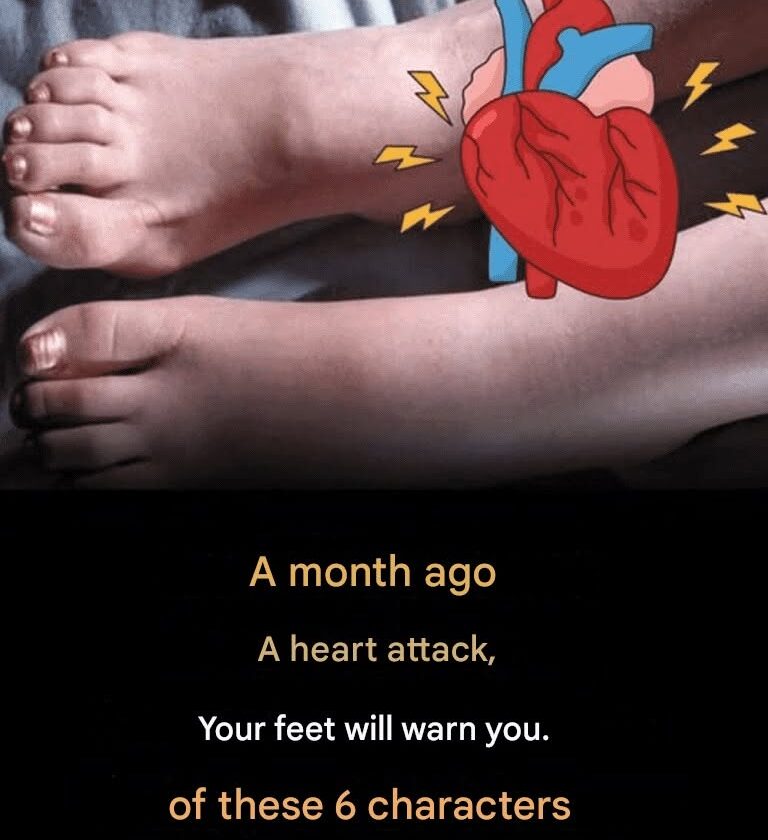
That headline is clickbait. There is no reliable set of “foot signs that appear one month before a heart attack” that doctors use in real diagnosis.
A heart attack (Myocardial infarction) usually develops due to gradual narrowing of the coronary arteries, and symptoms—when they appear—are often related to the chest, not just the feet.
🫀 What can happen before a heart attack (real warning signs)
Some people may notice general circulation problems, but these are not specific to a “1-month warning system”:
⚠️ 1. Leg swelling (edema)
- Swollen ankles or feet
- Can be related to heart strain, but also kidney, liver, or vein issues
⚠️ 2. Cold feet or poor circulation
- Feet feel unusually cold or pale
- Often linked to peripheral artery disease
⚠️ 3. Pain when walking (claudication)
- Cramping in calves or feet during walking
- Improves with rest
- More related to blocked leg arteries than heart attack directly
⚠️ 4. Slow-healing wounds on feet
- More common in diabetes or circulation problems
⚠️ 5. Numbness or tingling
- Usually nerve-related (diabetes, neuropathy), not a direct heart attack warning
⚠️ 6. Skin color changes (bluish/pale toes)
- Can indicate reduced blood flow
❗ Important reality check
- Most heart attacks happen without clear foot symptoms beforehand
- The most important warning signs are usually:
- Chest pressure or pain
- Shortness of breath
- Pain spreading to arm, jaw, or back
- Sudden sweating or nausea
🧠 Bottom line
Feet symptoms can sometimes reflect circulation problems, but they are not a reliable early warning system for heart attack one month in advance. These viral claims mix real medical symptoms with exaggeration.
If you want, I can give you a real checklist of early heart disease warning signs that doctors actually take seriously or explain how to reduce heart attack risk in practical steps.