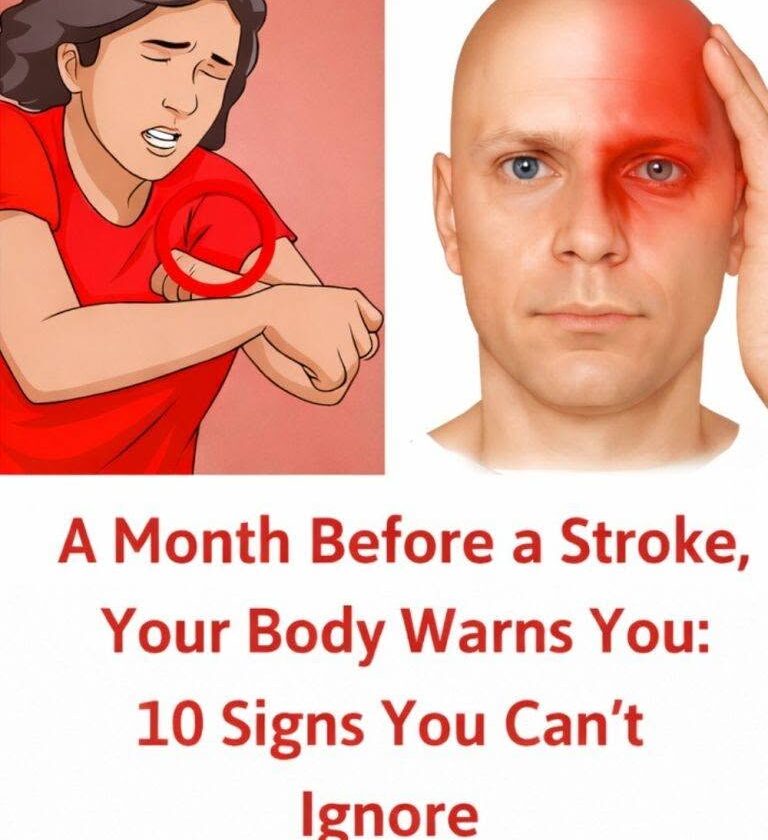
The headline “A month before a stroke, your body warns you: 10 signs not to ignore” is a common online health claim, but it can be misleading. Most strokes happen suddenly, and there is no reliable countdown of symptoms exactly one month before a stroke. However, some people may experience warning signs of a transient ischemic attack (TIA, or “mini-stroke”), which can be a serious warning that needs urgent medical attention.
Possible warning signs that should not be ignored
- Sudden weakness or numbness of the face, arm, or leg—especially on one side.
- Sudden trouble speaking or understanding speech.
- Sudden vision problems in one or both eyes.
- Sudden dizziness, loss of balance, or difficulty walking.
- A sudden, severe headache with no known cause.
- Confusion or difficulty thinking clearly.
- Brief stroke-like symptoms that disappear (possible TIA).
- New problems with coordination or movement.
- Unusual episodes of faintness or weakness, especially if sudden.
- New or worsening neurological symptoms that feel different from usual.
Remember FAST:
- F — Face: Does one side droop?
- A — Arm: Is one arm weak or numb?
- S — Speech: Is speech strange or difficult?
- T — Time: Seek emergency help immediately.
Ways to lower stroke risk
- Keep blood pressure controlled.
- Manage diabetes and cholesterol.
- Avoid smoking and tobacco.
- Exercise regularly.
- Eat a heart-healthy diet.
- Maintain a healthy weight.
- Take prescribed medicines as directed.
- Limit excess alcohol.
- Get regular health checkups, especially if you have risk factors.
If stroke symptoms appear suddenly—even if they go away after a few minutes—treat it as an emergency and seek medical care right away. Early treatment can greatly improve outcomes.