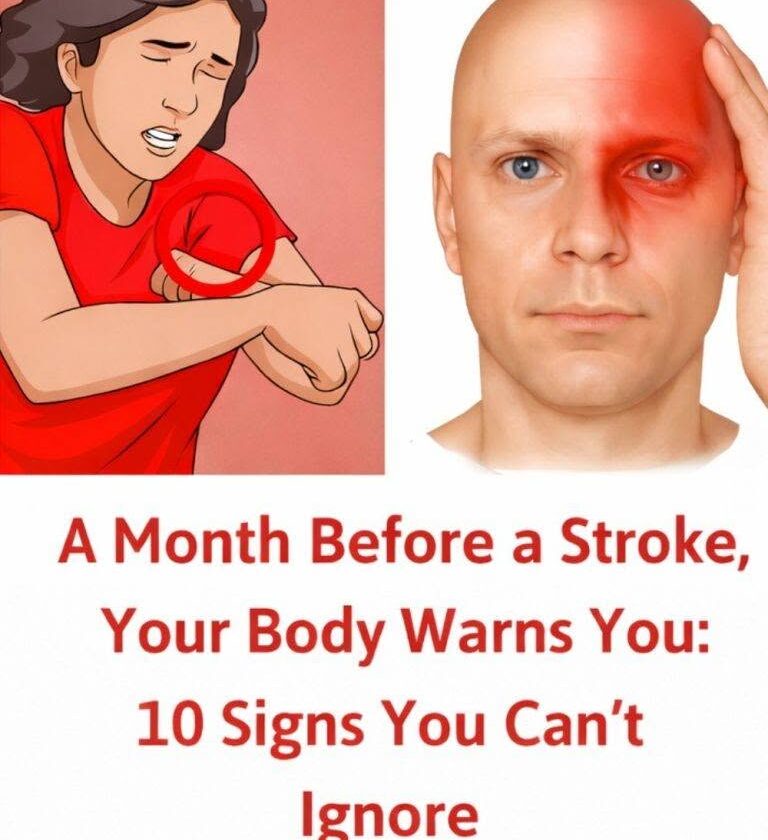
A Month Before a Stroke, Your Body May Warn You: 10 Signs Not to Ignore
A stroke often happens suddenly, but some people experience warning signs beforehand, especially from a transient ischemic attack (TIA), sometimes called a “mini-stroke.” A TIA occurs when blood flow to part of the brain is temporarily reduced. Symptoms may disappear quickly, but they should still be treated as a medical warning.
There is no guaranteed timeline—a stroke does not always give a one-month warning—but recognizing possible signs can help you seek care sooner.
10 Warning Signs That Should Not Be Ignored
1. Sudden weakness or numbness
A common warning sign is sudden:
- Weakness
- Tingling
- Numbness
especially on one side of the body (face, arm, or leg).
2. Trouble speaking or understanding words
Watch for:
- Slurred speech
- Difficulty finding words
- Confusion during conversations
3. Facial drooping
One side of the face may:
- Droop
- Feel numb
- Move differently when smiling
4. Sudden vision problems
Possible signs include:
- Blurry vision
- Double vision
- Loss of vision in one eye or both eyes
5. Unexplained dizziness or balance problems
Sudden:
- Loss of coordination
- Trouble walking
- Severe dizziness
can be a warning sign.
6. A sudden severe headache
A sudden, intense headache—especially one unlike previous headaches—requires urgent evaluation.
7. Episodes of confusion
Temporary confusion, difficulty understanding, or trouble completing familiar tasks may indicate a problem with brain circulation.
8. Difficulty swallowing
Sudden trouble swallowing can occur when areas of the brain involved in coordination are affected.
9. Unusual fatigue or weakness
Extreme tiredness alone is not usually a stroke sign, but sudden unexplained weakness—especially with other symptoms—should be checked.
10. Symptoms that come and go
A major warning sign is when symptoms appear briefly and then disappear. This can be a TIA and may signal increased stroke risk.
Remember FAST
F — Face: Is one side of the face drooping?
A — Arms: Can both arms be raised normally?
S — Speech: Is speech unclear or unusual?
T — Time: Call emergency services immediately if these signs appear