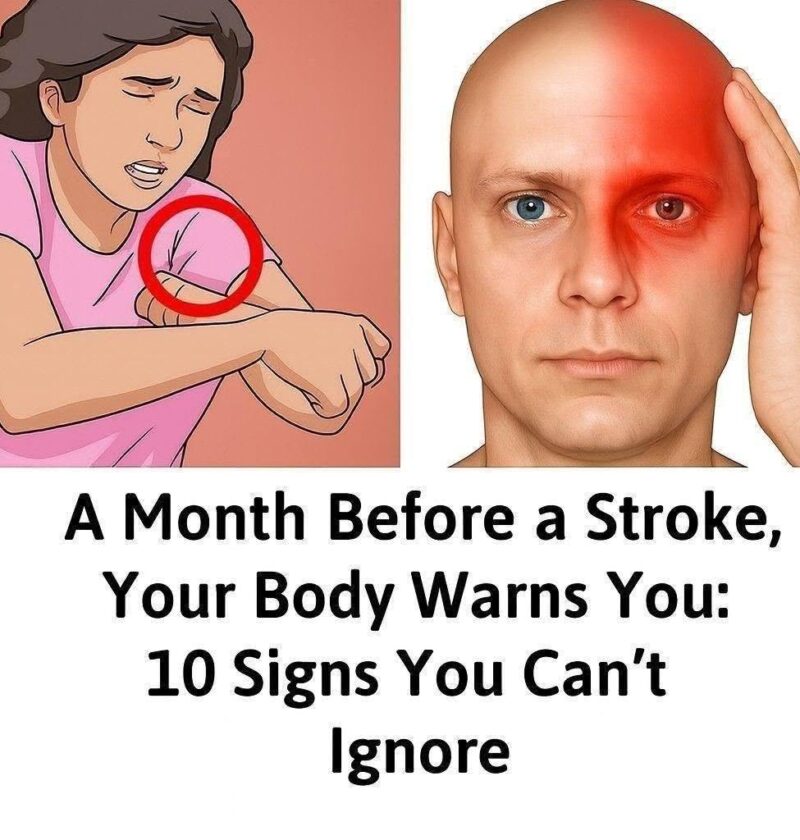
Headlines like “A month before a stroke, your body warns you: 10 signs not to ignore” are often oversimplified and slightly misleading.
It’s true that a stroke can sometimes be preceded by warning signs—but they are not reliably predictable a month in advance, and they don’t appear in a fixed checklist.
🧠 What a stroke actually is
A stroke (Stroke) happens when blood flow to part of the brain is blocked or a blood vessel bursts. It usually occurs suddenly, not gradually over weeks.
⚠️ Real warning signs you should NEVER ignore
These can happen minutes, hours, or days before a major stroke (often called a TIA or “mini-stroke”):
🚨 FAST signs
- F – Face drooping
- A – Arm weakness
- S – Speech difficulty
- T – Time to call emergency services
⚠️ Possible early warning symptoms (TIA or risk signals)
These may come and go:
- Sudden numbness or weakness (face, arm, or leg)
- Temporary vision loss or blurred vision
- Sudden confusion or trouble speaking
- Dizziness or loss of balance
- Severe unexplained headache
These can indicate a transient ischemic attack (TIA), which is a medical emergency warning sign.
❌ Why “10 signs a month before” is misleading
- There is no fixed timeline
- Many strokes happen without long warning
- Symptoms vary depending on brain area affected
- Some listed “signs” online are vague (fatigue, headaches, etc.) and not specific to stroke
🧠 Who is at higher risk
Risk increases with:
- High blood pressure
- Diabetes
- Smoking
- Heart disease
- High cholesterol
- Obesity or inactivity
✔️ Bottom line
- Stroke is usually sudden, not predictable a month ahead
- Some people may have warning events (like TIAs), but not everyone
- Focus on FAST symptoms and emergency action, not long symptom lists
If you want, I can give you a simple stroke prevention checklist tailored to everyday habits in Pakistan (diet, lifestyle, and warning signs).