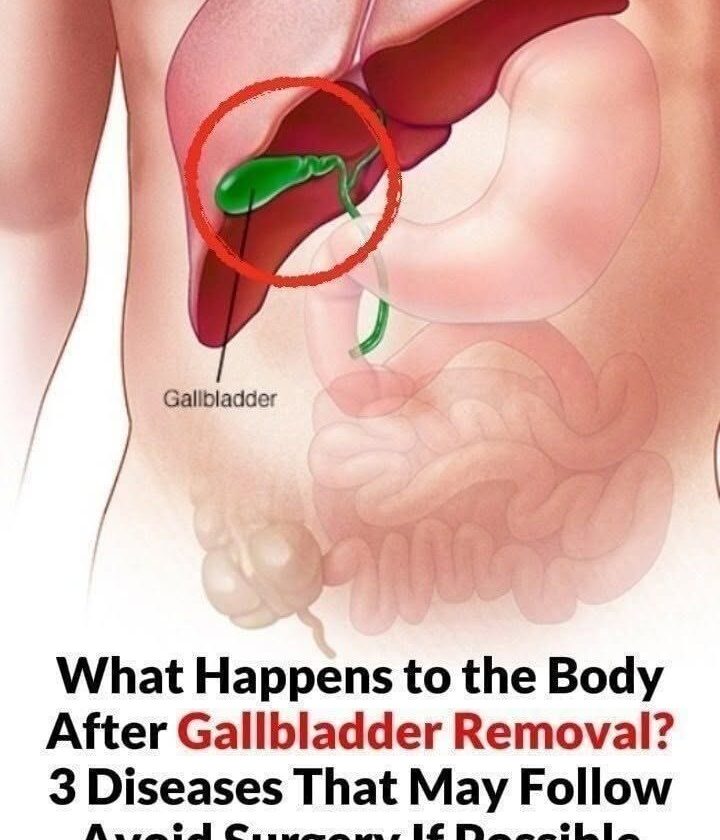
If you’re creating a health post about gallbladder removal, it’s important to present the topic accurately. Gallbladder surgery (cholecystectomy) is a common and generally safe procedure, and for many people with painful gallstones, infections, or other gallbladder problems, it is the recommended treatment. It is not a surgery that should be avoided when medically necessary.
Here is a balanced version:
⚠️ After Gallbladder Removal: 3 Changes Some People May Experience
Gallbladder removal (cholecystectomy) can greatly improve symptoms caused by gallstones and gallbladder disease. However, like any surgery, it may lead to changes in digestion for some people.
Possible effects include:
1️⃣ Digestive changes
Without a gallbladder, bile flows continuously into the intestine instead of being stored and released during meals. Some people may experience bloating, gas, or changes in bowel habits, especially after eating fatty foods.
2️⃣ Diarrhea or food sensitivity
A small number of people notice looser stools or that certain foods are harder to tolerate after surgery. Adjusting diet and eating smaller meals can often help.
3️⃣ Bile-related issues (less common)
Some people may develop ongoing abdominal discomfort or bile-related digestive problems that require medical evaluation.
✅ Before surgery, discuss:
• Your symptoms and diagnosis
• Whether other treatments are possible
• The benefits and risks in your specific situation
For many patients, gallbladder removal provides long-term relief and prevents serious complications. The decision should be made with a qualified healthcare professional based on your individual health needs.
I can also turn this into a doctor-style explanation of “what happens after gallbladder removal” or a myth-vs-fact article.