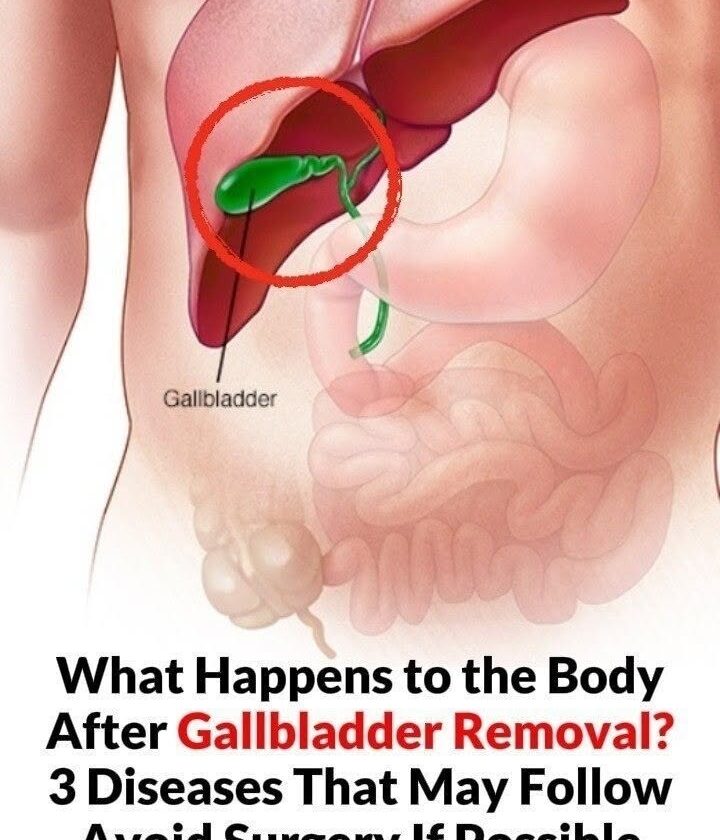
The idea that you should “avoid gallbladder removal when possible” is too broad and can be misleading. A Cholecystectomy (gallbladder removal) is a very common, generally safe operation, and for many people it is the best treatment for conditions like Cholelithiasis (gallstones) or Cholecystitis (gallbladder inflammation). When surgery is needed, delaying it can actually increase the risk of complications such as infection, pancreatitis, or bile duct obstruction.
That said, it’s also true that some people do develop longer-term digestive changes after the gallbladder is removed. These are real, but they don’t happen to everyone, and most are manageable.
Here are 3 conditions/syndromes that can occur after gallbladder removal:
1) Postcholecystectomy Syndrome
Some people continue to have symptoms like abdominal pain, bloating, nausea, or indigestion even after surgery. This is called postcholecystectomy syndrome.
It can be caused by:
- residual bile duct stones
- changes in bile flow
- unrelated stomach or intestinal conditions that were previously masked
Important point: it’s not a single disease, but a collection of possible causes.
2) Chronic Diarrhea / Bile Acid Diarrhea
Without a gallbladder, bile flows continuously into the intestines instead of being stored and released in controlled amounts.
In some people, this leads to:
- frequent loose stools
- urgency after meals
- fat malabsorption symptoms
This happens because excess bile acids irritate the colon. Treatments (like bile acid binders) are often effective.
3) Bile Reflux Gastritis or Duodenogastric Reflux
In some cases, bile flows backward into the stomach (and sometimes esophagus), causing irritation.
Possible symptoms:
- burning upper abdominal pain
- nausea
- bitter taste
- gastritis on endoscopy
This is less common but can be persistent in a minority of patients.
So should you “avoid” gallbladder surgery?
Not as a general rule.
For many people with symptomatic gallstones or gallbladder inflammation, removing the gallbladder is the definitive treatment and prevents serious complications. Living with untreated gallbladder disease can be more dangerous than the surgery itself.
However, doctors do sometimes recommend:
- watchful waiting (if stones are silent and not causing symptoms)
- dietary management in mild cases
- delaying surgery if inflammation needs to settle first
Bottom line
Gallbladder removal is not something to avoid automatically, but it also isn’t “trivial”—it’s a trade-off:
- Surgery risks (short-term)
- vs.
- Risk of ongoing gallbladder attacks or complications (if not treated)
If you want, I can break down:
- when surgery is actually necessary vs optional
- or how to manage gallstones without surgery safely in selected cases
- or recovery expectations after cholecystectomy in detail