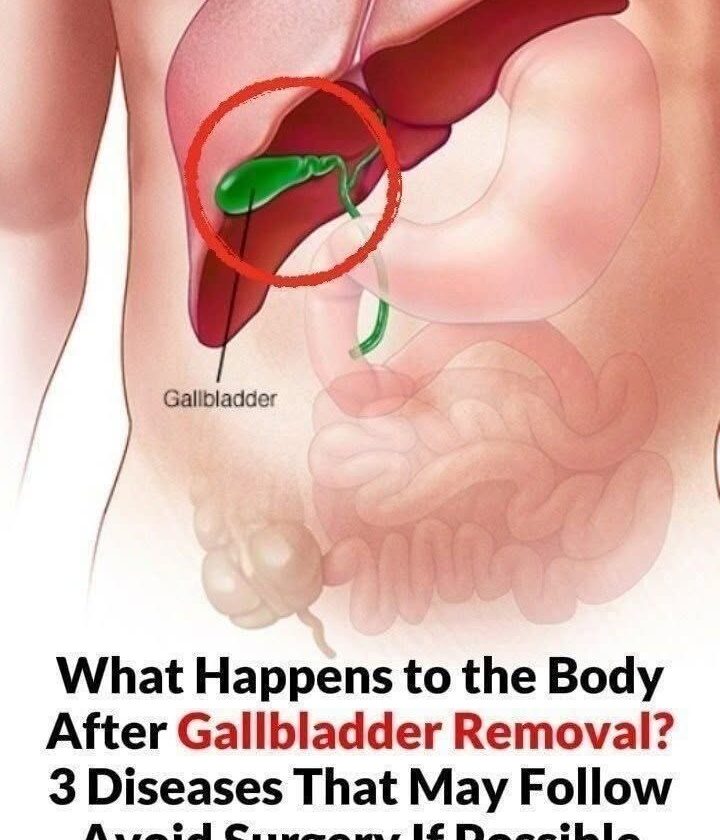
That headline is misleading and fear-based. Gallbladder removal is a very common surgery, and for the right patients it is not something to “avoid when possible” without medical reason.
We’re talking about removal of the gallbladder: Cholecystectomy
🧠 First: why the surgery is done
Doctors usually recommend gallbladder removal when there are:
- painful gallstones
- repeated gallbladder attacks
- inflammation or infection
The goal is to prevent serious complications like infection or bile duct blockage.
⚠️ “3 conditions you could develop” — what’s actually true
Yes, some people can have symptoms after surgery, but they are usually manageable, not dangerous surprises.
1. Post-cholecystectomy diarrhea
- Some people get loose stools after fatty meals
- Happens because bile flows continuously into the intestine
- Often improves over time or with diet changes
2. Bile reflux or indigestion
- Mild bloating or burning sensation in some cases
- Related to changes in bile flow
- Usually managed with diet or medication if needed
3. Post-cholecystectomy syndrome
- A small group has ongoing abdominal discomfort
- Causes vary (sometimes unrelated to the surgery itself)
- Needs medical evaluation to identify the real cause
🧠 Important reality check
These issues:
- are not guaranteed
- often temporary or treatable
- are usually less severe than untreated gallstone complications
🚨 What happens if you avoid surgery when it’s needed?
Leaving problematic gallstones untreated can lead to:
- severe gallbladder infection (cholecystitis)
- blockage of bile ducts
- pancreatitis (can be serious)
- repeated painful attacks
So in many cases, surgery is the safer option.
⚖️ Bottom line
Gallbladder removal is not something to fear universally. For properly selected patients, Cholecystectomy is a standard, safe, and often necessary treatment, and the risks of not treating the condition are usually higher than the risks of surgery.
If you want, I can explain:
- what life is like long-term without a gallbladder
- or what foods help prevent digestive issues after surgery.