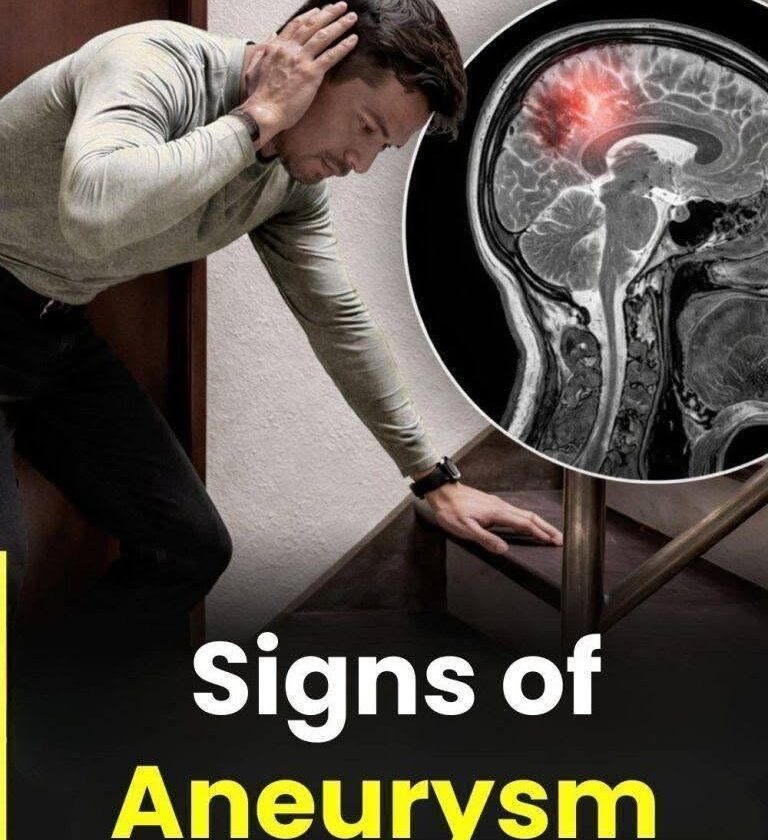
That headline is usually teasing a serious condition without context. An aneurysm can be dangerous, but the key point is: many aneurysms cause no symptoms until they become large or rupture.
One important condition here is Aneurysm—a bulge in a blood vessel wall that can occur in the brain, aorta, or other arteries.
⚠️ Warning signs you should never ignore
Symptoms depend on where the aneurysm is and whether it is leaking or rupturing.
1) Sudden, severe headache (brain aneurysm)
Often described as:
- “Worst headache of my life”
- Comes on instantly
This can signal a ruptured brain aneurysm.
2) Neck stiffness, nausea, or vomiting
Can occur with bleeding in the brain.
May also include sensitivity to light or confusion.
3) Sudden vision problems or double vision
Especially with brain aneurysms pressing on nearby nerves.
4) Sudden weakness, numbness, or trouble speaking
Stroke-like symptoms caused by bleeding or pressure on brain tissue.
5) Sudden severe chest or back pain
This is more associated with an aortic aneurysm (main artery in the body).
It may feel:
- Tearing or ripping pain
- Pain moving to the back or abdomen
6) Pulsing feeling in abdomen
Sometimes seen with abdominal aneurysms before rupture.
7) Loss of consciousness or collapse
Can happen if a rupture causes major internal bleeding.
🧠 Important reality check
Most aneurysms:
- Develop silently over time
- Are found accidentally on scans
- Never rupture
Risk increases with:
- High blood pressure
- Smoking
- Family history
- Certain genetic conditions
🚨 When it’s an emergency
Seek urgent medical care if someone has:
- Sudden “worst headache”
- Fainting or collapse
- Sudden severe chest/back pain
- Stroke-like symptoms
These are medical emergencies, not “wait and see” situations.
Bottom line
Aneurysm is often silent, but sudden severe headache, chest/back pain, or neurological symptoms are the biggest red flags and should never be ignored.
If you want, I can also explain the difference between a safe, unruptured aneurysm vs a dangerous one in simple terms.