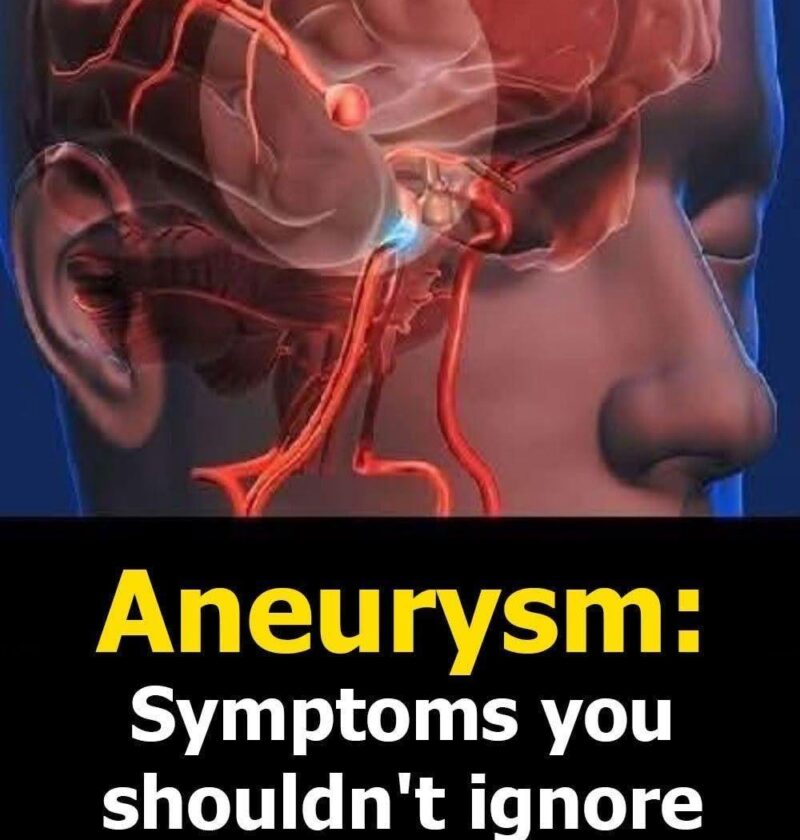
An Aneurysm is a bulge or weakening in a blood vessel wall. It can stay silent for a long time—but if it starts leaking or ruptures, it becomes a medical emergency.
Signs you shouldn’t ignore
1) Sudden, severe pain
- “Worst headache of your life” (often in brain aneurysm/rupture)
- Sudden chest, back, or abdominal pain (depending on location)
2) Neurological symptoms
- Sudden dizziness or loss of balance
- Blurred or double vision
- Drooping eyelid or uneven pupils
- Confusion or difficulty speaking
- Weakness or numbness on one side of the body
3) Warning signs before rupture (sometimes)
- Persistent localized headache
- Pain behind one eye
- Pulsing sensation in the abdomen (abdominal aneurysm)
- Unexplained neck pain or stiffness
4) Signs of rupture (life-threatening)
- Collapse or loss of consciousness
- Sudden severe headache with vomiting
- Rapid drop in blood pressure
- Cold, clammy skin
Important point
Many aneurysms cause no symptoms until they become dangerous, which is why they’re often found incidentally on scans.
If someone has sudden severe headache, fainting, or intense chest/back/abdominal pain, that should be treated as an emergency—call local emergency services immediately rather than waiting.
If you want, tell me the type you’re curious about (brain, aortic, etc.), and I can break down symptoms more specifically.