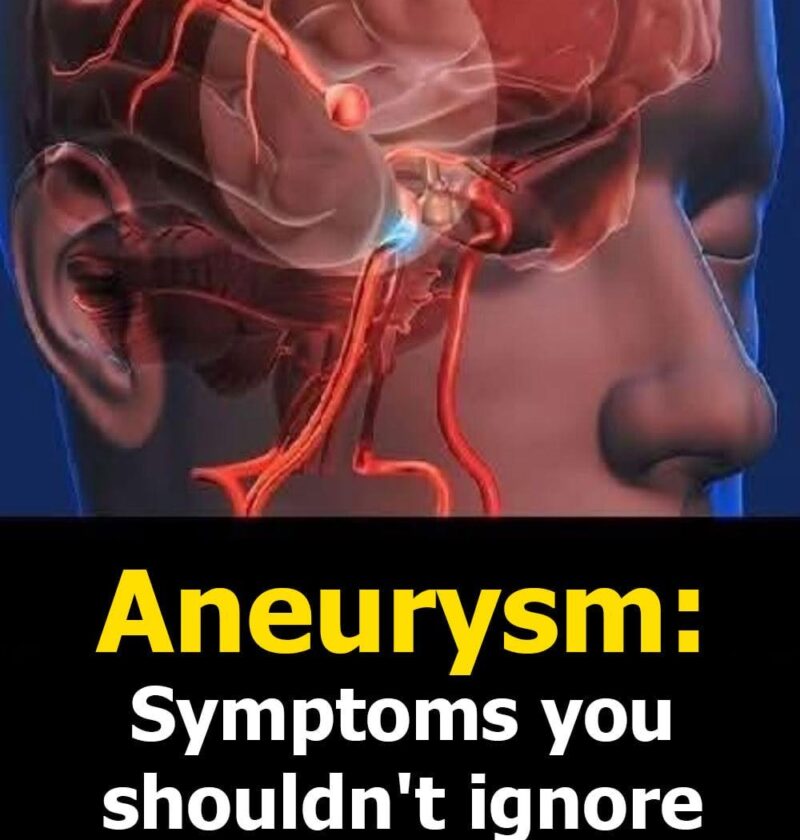
“Aneurysm: Signs you shouldn’t ignore” headlines are often designed to sound urgent, but the medical reality is more specific: most aneurysms cause no symptoms until they become large or rupture. The key is knowing the true warning signs of a dangerous aneurysm rather than vague “possible symptoms.”
An aneurysm is a weakened, bulging area in a blood vessel, such as in the brain or a major artery. A serious form is Aneurysm.
🚨 Emergency warning signs (possible rupture)
These require immediate medical attention:
Brain aneurysm rupture (subarachnoid hemorrhage)
- Sudden, extremely severe “worst headache of life”
- Neck stiffness
- Nausea or vomiting
- Loss of consciousness
- Seizure
- Sensitivity to light
Aortic aneurysm rupture
- Sudden, severe chest, back, or abdominal pain
- Pain that feels “tearing” or ripping
- Dizziness or fainting
- Rapid drop in blood pressure
These are life-threatening emergencies.
⚠️ Possible warning signs before rupture (often subtle or absent)
Most aneurysms don’t show clear symptoms, but sometimes:
Brain aneurysm (before rupture)
- Double vision or vision changes
- Drooping eyelid
- Pain above or behind the eye
- One-sided weakness or numbness
- Speech difficulty (if affecting brain tissue)
Large abdominal aneurysm
- Deep, constant abdominal or back pain
- Pulsating feeling near the belly button
- Fullness or pressure in abdomen
🧠 Important reality check
- Many aneurysms are discovered accidentally during scans.
- Small aneurysms often never cause problems.
- The biggest danger is rupture, not gradual symptoms.
Risk increases with:
- High blood pressure
- Smoking
- Family history
- Older age
When to seek urgent help
Go to emergency care immediately if there is:
- Sudden severe headache unlike any before
- Sudden chest/back/abdominal tearing pain
- Fainting or collapse
- Sudden neurological symptoms (vision, speech, weakness)