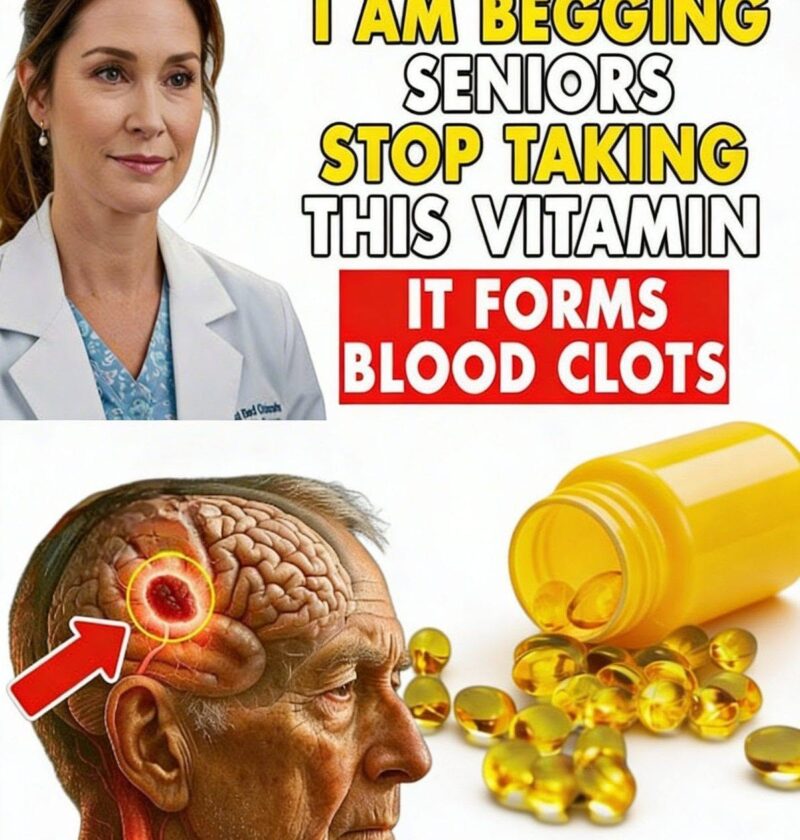
That kind of headline is classic clickbait. A “brain doctor shocked overnight stroke risk” framing is designed to sound urgent, but it usually oversimplifies or exaggerates what real medical research actually shows.
Here’s the ground truth:
🧠 Can a vitamin raise stroke risk “overnight”?
For most vitamins: No credible evidence shows a single vitamin suddenly causes stroke overnight in healthy people.
Stroke risk is shaped by long-term factors, not one dose of a supplement:
- High blood pressure
- Diabetes
- Smoking
- High LDL cholesterol
- Atrial fibrillation
- Obesity and inactivity
⚠️ Where confusion usually comes from
Some studies show associations, not instant danger:
1) High-dose supplements (not normal intake)
- Very high doses of some supplements (especially fat-soluble ones) can be harmful over time.
- But this is about chronic overuse, not one-day effects.
2) Vitamin E (high-dose)
- Some research has suggested high-dose Vitamin E supplements may slightly increase bleeding risk in certain people, especially those on blood thinners.
- This is not “overnight stroke risk,” and findings are mixed.
3) B vitamins and folic acid
- Folic Acid and other B vitamins generally reduce homocysteine, which is linked to vascular risk.
- Large trials have not shown sudden stroke spikes from normal use.
🧠 What neurologists actually worry about
From a brain/vascular perspective, the real risks are:
- Uncontrolled blood pressure spikes
- Clotting disorders
- Severe artery disease
- Irregular heart rhythms
Not a single normal vitamin dose.
🚨 Bottom line
If a video or article claims:
“This vitamin raises stroke risk overnight”
It’s almost always:
- Misinterpreting a study
- Talking about extreme doses
- Or purely sensational content