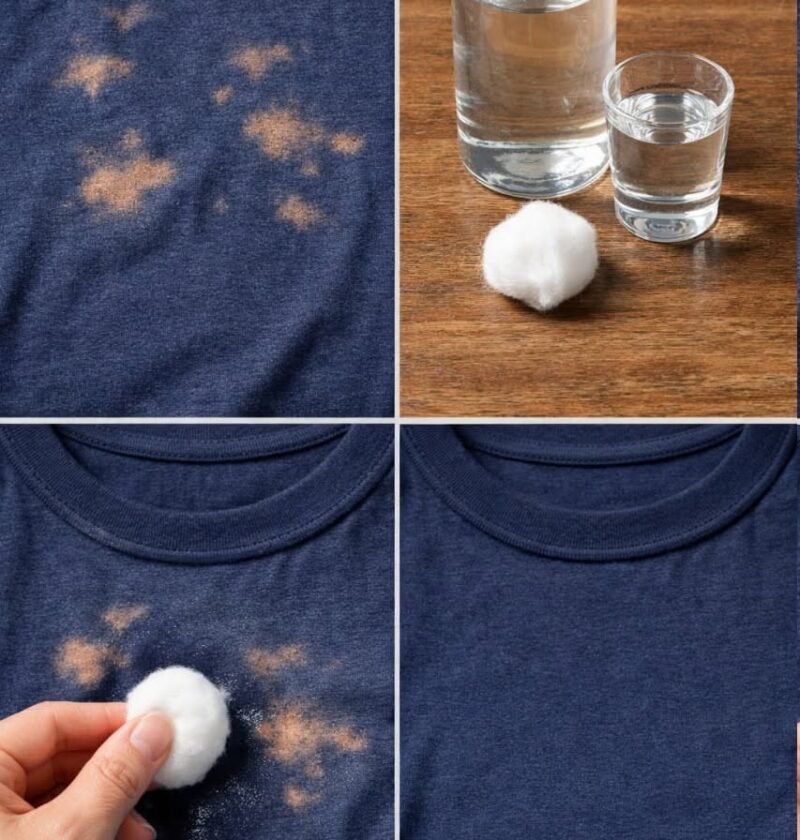
That’s another clickbait-style claim. Bleach doesn’t usually leave a “stain”—it actually removes the dye from fabric, so the color is permanently lost in that spot. That’s why there’s no single “solution” that restores it like new.
But you can save the clothing depending on the situation.
👕 What bleach damage really is
Bleach (sodium hypochlorite) breaks down color molecules in fabric. So:
- It is not dirt you can wash out
- It is color loss (decolorization)
- The fabric itself is usually still fine
🧵 Real ways to fix bleach spots
1. 🎨 Fabric dye (best option)
- Re-dye the whole clothing item
- Or dye it a darker color to cover spots
Works well on cotton and denim
2. 🖌️ Fabric paint or marker (small spots)
- Good for tiny bleach dots
- You can match color or create designs
3. ✂️ Creative redesign (very popular)
Instead of hiding it:
- Turn it into tie-dye
- Add patches or embroidery
- Convert it into a new style (distressed look)
4. 🧥 Overdye or darken the whole garment
- Helps blend uneven bleach spots
- Makes damage less visible
❌ What does NOT work
These viral “solutions” are misleading:
- Vinegar ❌ (does not restore color)
- Baking soda ❌ (no effect on dye loss)
- Lemon juice ❌ (can worsen fabric damage)
- Detergent ❌ (only cleans dirt, not bleach spots)
🧠 Key truth
Bleach damage is permanent color removal, not a stain. So it cannot be “cleaned out,” only covered or recolored.