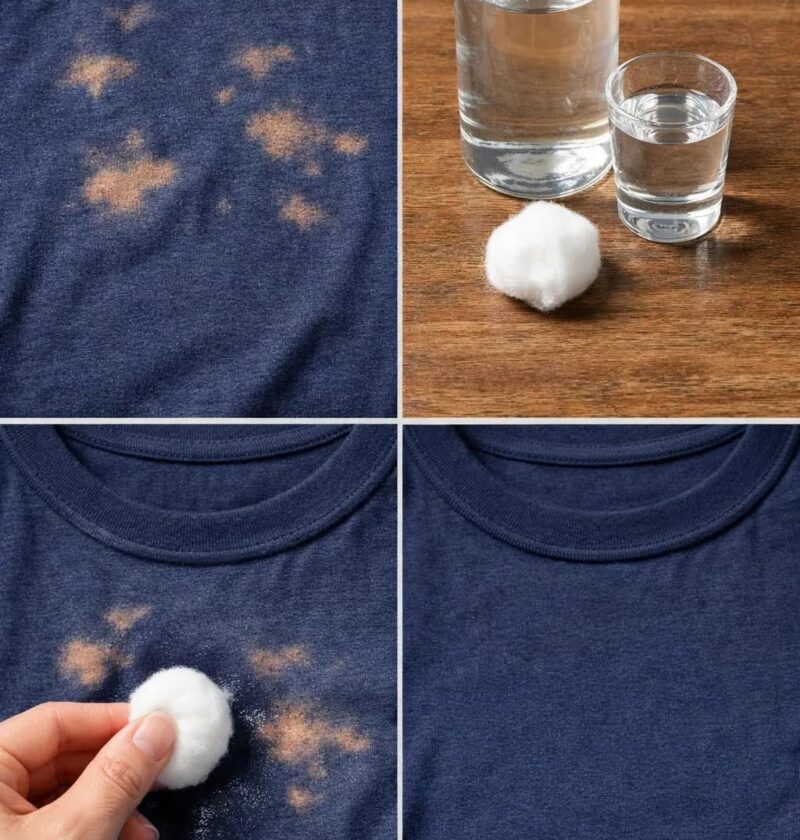
That “no need to throw them away, here’s the solution” claim is mostly clickbait. Bleach stains don’t actually get removed because bleach doesn’t add a stain—it removes dye permanently from fabric.
So the real situation is: the color is gone, not dirty.
🧴 What bleach stains actually are
Household bleach chemically strips pigment from fabric fibers. That means:
- The original color is destroyed
- It cannot be “washed out”
- There is no chemical that restores the original dye at home
👍 What you can do instead
1) 🎨 Re-dye the fabric (best real fix)
You can restore color using fabric dye:
- Works best on cotton, linen, rayon
- Less effective on polyester blends
You can:
- Dye the whole garment a darker color
- Or create a uniform new color over the entire piece
2) 🖌️ Hide the bleach stain creatively
If it’s a small spot:
- Fabric markers or paint
- Embroidery or patches
- Decorative stitching
- Tie-dye patterns (very effective for hiding uneven spots)
This turns damage into a design feature.
3) 🧼 Lighten the rest of the fabric (rare trick)
Sometimes people intentionally lighten the whole item so the bleach spot blends in:
- Only works on certain fabrics
- Risky and often uneven
4) ❌ What does NOT work
- Vinegar or baking soda (won’t restore color)
- Washing again (won’t help)
- “Miracle sprays” (marketing gimmicks)
- Rubbing alcohol or toothpaste (can worsen fabric damage)
🧠 Key truth
Bleach stains are not stains—they are color loss, and lost dye cannot be “cleaned back.”
💡 Bottom line
Instead of trying to erase bleach marks, the realistic options are:
- Re-dye the clothing, or
- Turn it into a design feature
If you want, I can show you simple DIY tie-dye patterns that completely hide bleach spots (and actually look stylish instead of ruined).