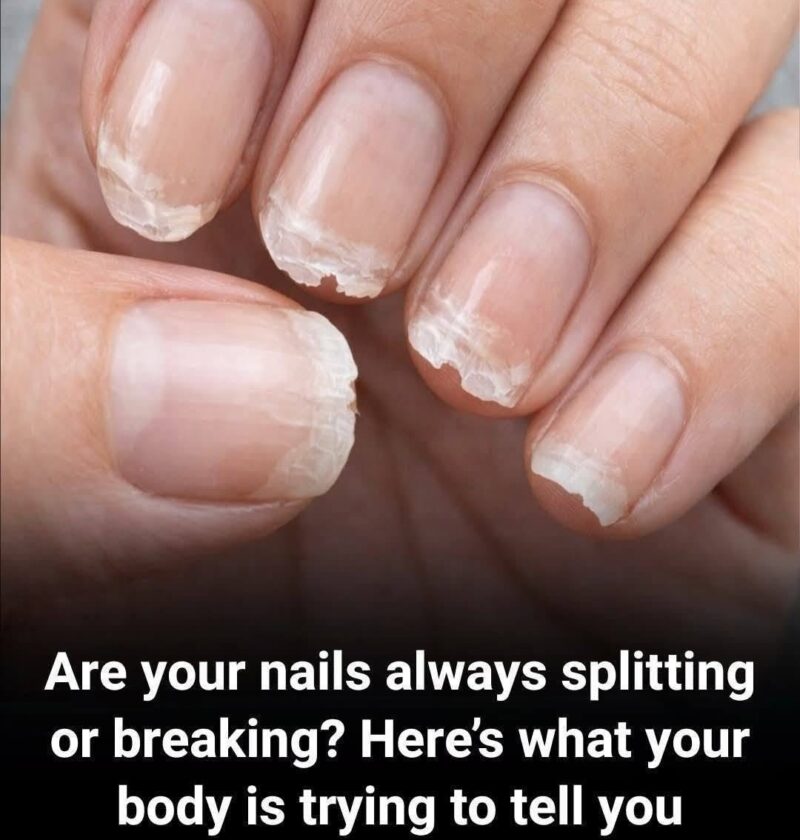
Brittle or fragile nails are common and are most often caused by frequent exposure to water, soaps, detergents, or normal aging, not by a serious illness. However, they can sometimes be a sign of an underlying health issue.
Possible causes include:
- Frequent wetting and drying of the hands or repeated use of harsh cleaning products.
- Dry nails due to aging or low humidity.
- Nutritional deficiencies, such as too little iron. Less commonly, inadequate intake of certain nutrients may contribute if your diet is poor.
- iron deficiency anemia, which can sometimes cause thin, brittle, or spoon-shaped nails.
- hypothyroidism, which may be associated with dry, brittle nails and other symptoms like fatigue and feeling cold.
- Fungal nail infections, which can make nails brittle, thickened, or discolored.
- Skin conditions such as psoriasis or eczema can also affect the nails.
What may help
- Moisturize your hands and nails regularly.
- Wear gloves when washing dishes or using cleaning products.
- Avoid using nails as tools to pry or scrape objects.
- Eat a balanced diet with enough protein, iron, and other essential nutrients.
- Keep nails trimmed and avoid excessive use of nail polish remover, especially those containing acetone.
When to seek medical advice
Consider seeing a healthcare professional if:
- Nail changes are sudden or severe.
- Only one nail is affected without an obvious injury.
- Nails become thick, yellow, or painful.
- You also have symptoms such as fatigue, weight changes, hair loss, or shortness of breath.
- The problem persists despite good nail care.
A healthcare professional can determine whether the cause is simply nail damage or whether testing for conditions such as iron deficiency or thyroid disease is appropriate.