This is another engagement-driven health post. It mixes a real observation with an exaggerated “signals bigger risks” framing and a teaser (“first comment”) to push clicks.
Here’s what the science actually supports.
Walking speed in older adults is sometimes used as a general indicator of health and mobility, but it is not a diagnosis by itself. Reduced walking speed can be associated with:
- lower muscle strength
- balance issues
- joint pain (like arthritis)
- cardiovascular or neurological conditions
- normal aging changes
There is no single rule that “slow walking after 60 means loss of independence is inevitable.”
About the claim (calf weakness + stride length)
There is a real biomechanical idea here:
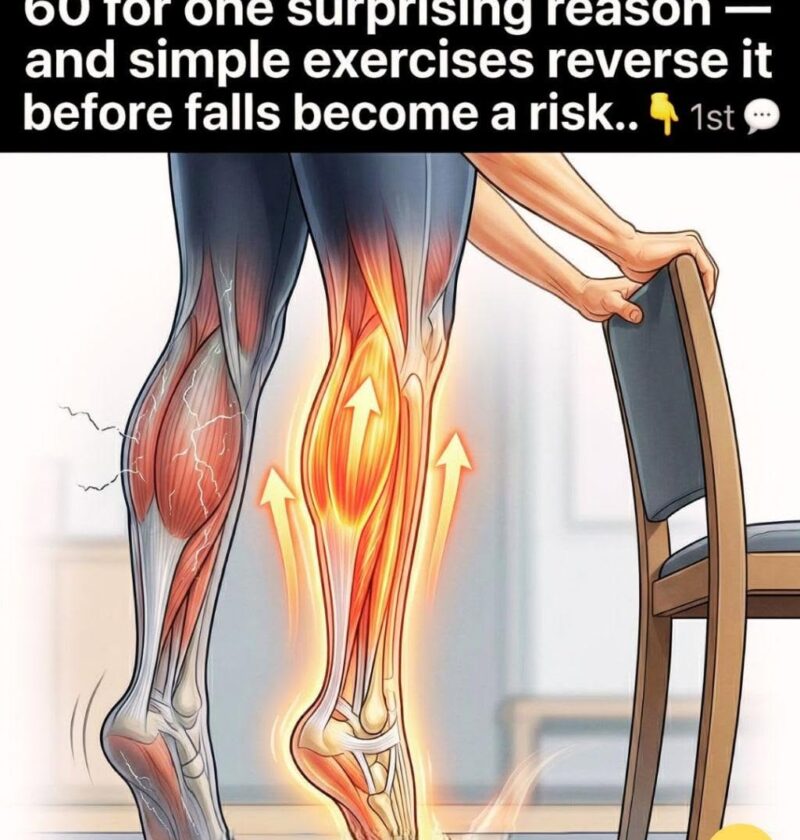
- Weak calf muscles and reduced leg strength can shorten stride length
- Lower muscle power can contribute to fatigue and slower walking
- Strength training can improve mobility and balance in older adults
So the exercise part is broadly true—but the viral framing is exaggerated.
What actually helps (evidence-based)
For people over 60, the most effective ways to maintain walking speed and independence include:
- Resistance training (legs, hips, calves)
- Balance exercises (reduces fall risk)
- Regular walking or low-impact cardio
- Protein intake adequate for muscle maintenance
- Checking vision, footwear, and joint health
These improvements are well-supported in geriatric health research—not quick “3-step fixes,” but consistent training.
Important reality check
- Slow walking alone is not proof of decline
- Many healthy older adults walk slowly due to habit, pain, or caution
- Improvements are possible at almost any age with proper exercise and medical support when needed