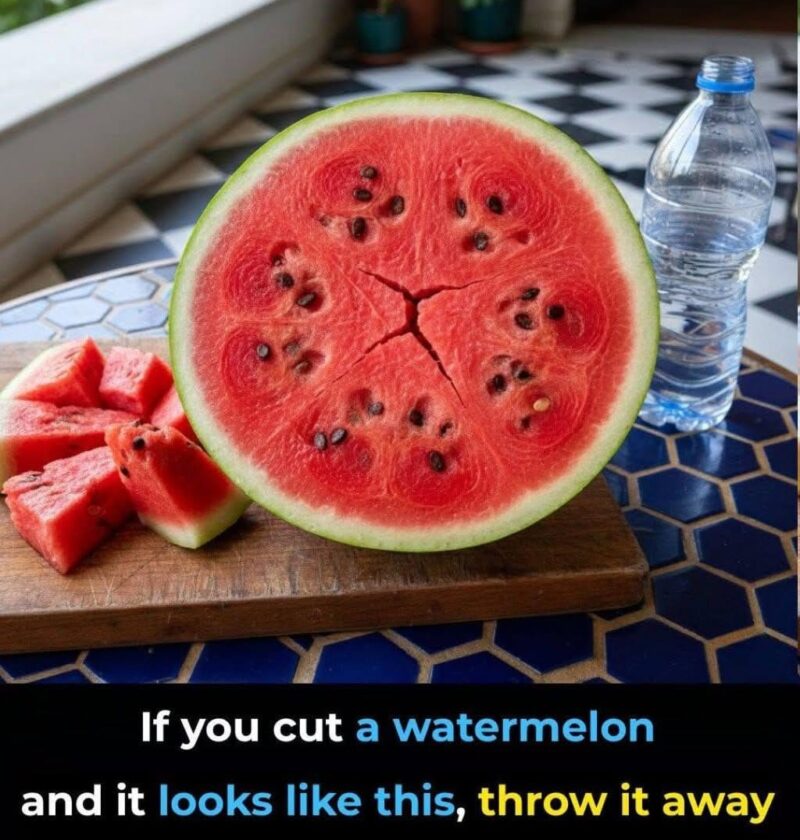
That headline—“Don’t eat your watermelon if it looks like this – throw it out immediately”—is another clickbait warning, but the idea behind it is partly legitimate: watermelon can spoil or become unsafe in certain conditions, especially after cutting.
Here’s what actually matters.
When you SHOULD throw away watermelon
1. Sour or alcoholic smell
If it smells:
- fermented
- like alcohol or vinegar
👉 it’s gone bad (yeast/bacteria fermentation has started)
2. Slimy or mushy texture
Good watermelon should be:
- crisp and juicy
Bad signs:
- slimy surface
- mushy, collapsing flesh
👉 indicates microbial growth
3. Off colors or dark spots
Watch for:
- very dark, wet-looking patches
- mold (white, green, or black fuzzy spots)
- unusual “stringy” breakdown inside
👉 mold = immediate disposal
4. Fizzy or “bubbly” taste
If it tastes:
- slightly fizzy
- sharp or tangy (not sweet)
👉 fermentation has started → unsafe
5. Left out too long (big hidden risk)
Cut watermelon is especially risky if:
- left at room temperature for more than ~2 hours
- not refrigerated properly
Bacteria like warm, sugary fruit.
What is NOT dangerous (common confusion)
These are normal and often mistaken for spoilage:
- Yellow field spot (ripeness indicator)
- Seeds inside
- Slight texture variation near the rind
- Natural sugar crystals in very ripe fruit
Bottom line
If watermelon shows bad smell, slime, mold, or fermented taste—throw it out.
But most viral posts exaggerate normal ripeness traits to scare people.
If you want, tell me what the “looks like this” part showed (photo description or symptoms), and I’ll tell you whether it was actually unsafe or just normal ripening.