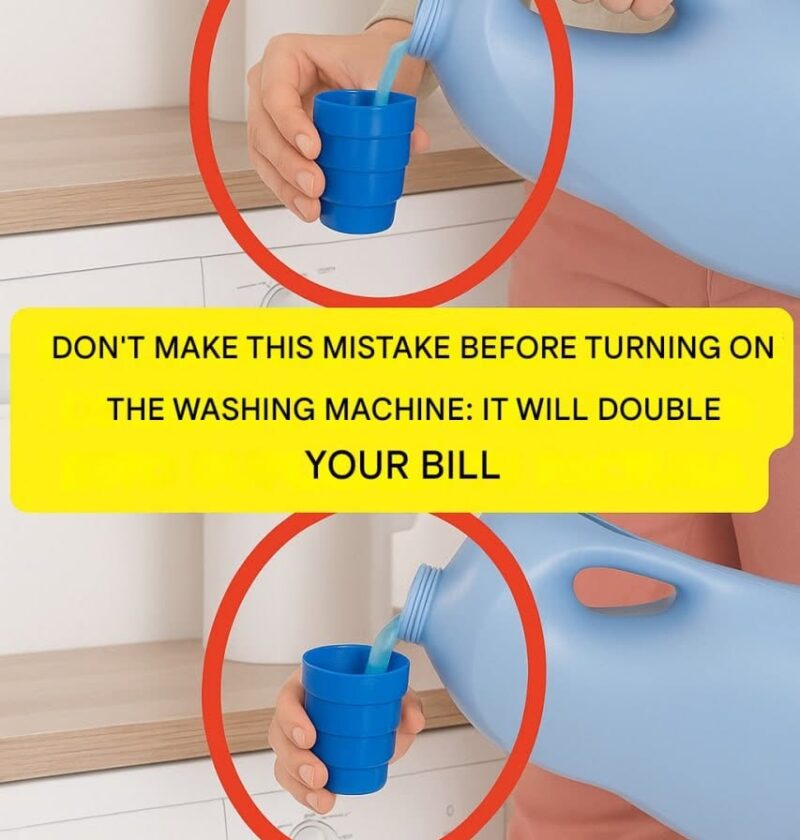
That line is another exaggerated “money-saving hack” headline. There’s no single “mistake” before turning on a washing machine that literally doubles your electricity bill—but there are habits that can noticeably increase energy and water use over time.
Here are the real ones people often misunderstand:
⚡ 1. Running half-empty loads
This is the most common issue.
- You still use almost the same water and electricity
- Result: higher cost per item washed
👉 Better: wait for a full load (but don’t overstuff it)
🌡️ 2. Using hot water unnecessarily
Heating water uses the most energy in a wash cycle.
- Cold or 30°C washes often clean clothes just fine
- Hot cycles should be reserved for heavily soiled items or bedding
🧼 3. Using too much detergent
More soap doesn’t mean cleaner clothes.
- Can cause extra rinse cycles
- Builds residue in the machine
🔁 4. Extra rinse cycles or long cycles by default
- Some people always choose “intensive” or “extra rinse”
- This increases both water and electricity use
🧽 5. Poor maintenance of the machine
A dirty or clogged filter can reduce efficiency:
- Machine works harder
- Longer cycles
- Higher energy use
⚠️ What does NOT double your bill
Myths you’ll see online:
- “Opening the door before starting”
- “Putting clothes in wrong order”
- “Starting the machine at a certain time”
These have little to no impact on cost.
🧠 Bottom line
Your washing machine bill mainly depends on:
- Water temperature
- Load size
- Cycle length
- Frequency of use
No single “mistake” instantly doubles your bill—it’s small inefficiencies over time, not one hidden trick.
If you want, I can show you the most energy-efficient washing machine settings that actually reduce your bill without affecting cleanliness.