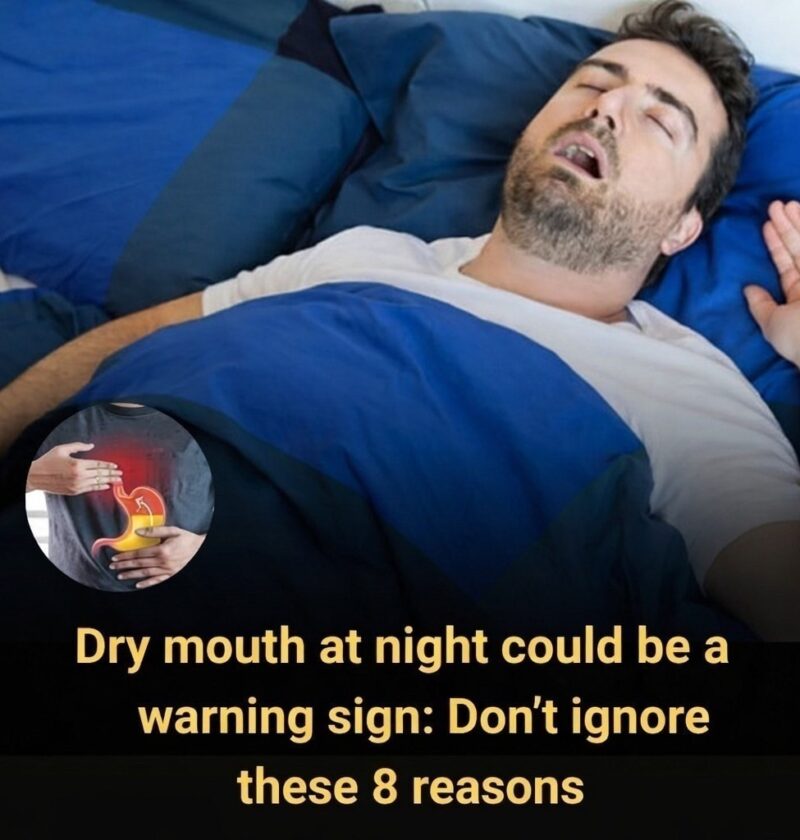
Dry mouth at night (often called nocturnal xerostomia) is common, but when it happens regularly it can sometimes point to an underlying health issue rather than just dehydration or sleeping with your mouth open.
Here are 8 warning signs you shouldn’t ignore if you’re waking up with a very dry mouth at night.
1) Persistent dry mouth even during the day
If dryness isn’t limited to nighttime and continues through the day, it may suggest reduced saliva production rather than simple dehydration.
This can be linked to medications like antihistamines (Antihistamines) or chronic conditions affecting salivary glands.
2) Constant thirst that doesn’t improve with water
If you feel thirsty all the time—even after drinking fluids—it may signal blood sugar imbalance.
One possible cause is Type 2 Diabetes Mellitus, where high glucose levels can lead to dehydration and dry mouth.
3) Thick, sticky, or “stringy” saliva
Saliva that feels unusually thick can indicate reduced saliva flow. This increases risk of cavities and gum disease because saliva normally protects your teeth.
4) Bad breath that doesn’t improve with brushing
Saliva helps wash away bacteria. When it’s reduced, bacteria build up overnight, causing persistent halitosis.
If this is frequent, it’s worth checking for underlying causes rather than only oral hygiene issues.
5) Difficulty swallowing or speaking at night or morning
Dry tissues in the mouth and throat can make swallowing or talking uncomfortable. This can also disturb sleep quality and cause frequent waking.
6) Burning sensation in the mouth or tongue
A dry mouth can sometimes come with a burning feeling on the tongue or inner cheeks, especially in long-term cases.
This may indicate nerve or salivary gland involvement.
7) Frequent cavities or gum irritation
If you’re suddenly developing more dental problems, reduced saliva could be a factor. Saliva protects enamel and neutralizes acids, so chronic dryness raises cavity risk significantly.
8) Dry eyes along with dry mouth
When dry mouth is paired with dry, irritated eyes, it may suggest an autoimmune condition such as Sjögren’s syndrome, which affects moisture-producing glands in the body.
When dry mouth at night is usually harmless
Sometimes it’s not serious and may be caused by:
- Sleeping with your mouth open (nasal congestion)
- Dehydration
- Dry indoor air or fan/AC use
- Alcohol or caffeine intake before bed
- Certain medications
When to see a doctor or dentist
You should get checked if dry mouth:
- Lasts more than 2–3 weeks
- Affects your sleep regularly
- Comes with excessive thirst, weight loss, or fatigue
- Causes frequent dental issues
- Is combined with dry eyes or joint pain
If you want, I can also explain simple home remedies to reduce night dry mouth or help you figure out whether your symptoms sound more like dehydration, medication side effects, or something medical.